





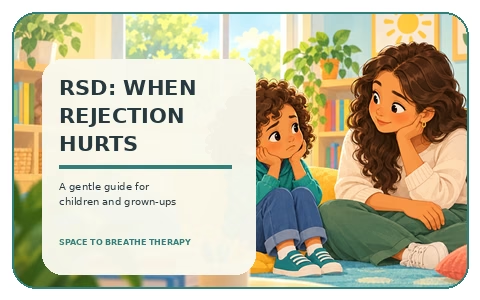
RSD: WHEN REJECTION HURTS - A CHILD-FRIENDLY GUIDE
This gentle eight-page guide is for children who experience rejection, criticism, exclusion or uncertainty as intensely painful, and for the grown-ups who support them. It uses simple language to explain what people may mean by RSD (Rejection Sensitive Dysphoria), while making clear that RSD is not a standalone formal diagnosis and that a child does not need a label to deserve support.
The guide helps children notice their own rejection-alarm signals, separate what happened from a first frightening guess without dismissing real hurt, find a pause that works for their body, and ask for help using speech, writing, pictures, gestures or AAC. It includes prompts to make an individual support plan and a page for parents, carers and school staff about responding with calm, clear and validating support.
The resource does not assume that every concern is imagined or that all children experience rejection sensitivity in the same way. It encourages adults to take bullying, exclusion and unsafe situations seriously and to seek individual advice when distress is frequent or affects school, friendships, sleep or daily life.
This is educational information, not a diagnosis or a substitute for clinical assessment. RSD is a descriptive term, not a standalone formal diagnosis.
Sources
- Cleveland Clinic, “Rejection Sensitive Dysphoria (RSD),” medically reviewed; updated 30 August 2022: https://my.clevelandclinic.org/health/diseases/24099-rejection-sensitive-dysphoria-rsd
- NICE guideline NG87, Attention deficit hyperactivity disorder: diagnosis and management: https://www.nice.org.uk/guidance/ng87/chapter/recommendations
- NHS, ADHD in children and young people: https://www.nhs.uk/conditions/adhd-children-teenagers/
- The lived experience of rejection sensitivity in ADHD: A qualitative exploration, PLOS ONE, 2025: https://doi.org/10.1371/journal.pone.0314669
Space to Breathe Therapy




