



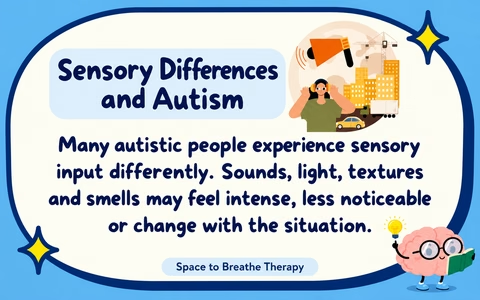

Sensory Differences and Autism

Understand sensory differences in autism through interactive choices and gentle reflection. Recognise sensations that bring comfort, feel overwhelming or go unnoticed. Create a downloadable sensory map to communicate preferences, identify helpful adjustments and support everyday comfort as your needs change.

Download
Sensory Differences and Autism

SENSATIONS • PREFERENCES • COMFORT

Sensory Differences and Autism

Your sensory experience deserves to be understood.

Many autistic people experience sensory input differently. Some sensations may feel intense, others less noticeable, and experiences can vary across senses and situations. Sensory differences can also bring enjoyment and comfort.

Choose a sensory area

Tap for reflection ideas. You do not need to test yourself or tolerate an uncomfortable sensation.

Which sensory area feels relevant?

Find a comfortable adjustment

Start with your experience and your choice.

Different needs can exist together

You may want less sound but more movement, or enjoy a texture that someone else avoids. There is no single sensory profile for autism. Ask what helps instead of labelling a person difficult or fussy.

Sensory processing is different from eyesight, hearing or other physical health conditions. New pain, hearing changes or other new symptoms deserve appropriate healthcare advice. An occupational therapist may help when sensory needs significantly affect everyday life.

My sensory comfort map

Write only what feels useful. This page does not diagnose autism or sensory conditions. Writing stays here while the page is open and is not saved automatically. Download a copy to keep it.

Further information

National Autistic Society: sensory processing

NHS England: sensory-friendly resource pack

Space to Breathe Therapy



