



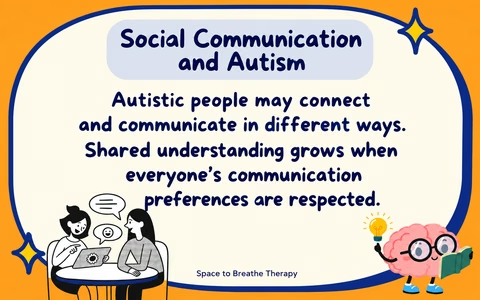

Social Communication and Autism

Understand social communication in autism through interactive choices and gentle reflection. Recognise different ways of connecting, clarify misunderstandings and identify helpful adjustments. Create a downloadable preferences guide to express your needs, respect boundaries and build shared understanding in everyday interactions.

Download
Social Communication and Autism

CONNECTION • CLARITY • RESPECT

Social Communication and Autism

Different ways of communicating deserve understanding.

Autistic people may understand and express social communication differently. Preferences and support needs vary. Eye contact, facial expression or a quick spoken response do not reliably show how interested someone is in connecting.

Choose a communication preference

Tap for an idea. There is no single correct way to connect.

What feels useful to you?

Build shared understanding

Communication is a shared responsibility.

Ask instead of assuming

A person may value connection while preferring less conversation, more direct language or time alone afterwards. They may also choose solitude. Respect both connection and boundaries.

Misunderstandings can happen between people with different communication styles. The aim is mutual understanding, not pressure to copy someone else’s expression, eye contact or way of speaking.

My communication preferences

Write only what feels useful and share only what you choose. This reflection is not a diagnostic assessment. Your writing is not saved automatically. Download a copy before closing or refreshing this page.

Further information

National Autistic Society: autism and communication

Space to Breathe Therapy



