






A-Z Mental Health
Health Support Directory
Practitioners & Contributors Directory
Depression & Anxiety
Substance Misuse & Addiction
Understanding Grief
Neurodiversity
LGBTQ+
Physical Health & Body Awareness
Food Nutrition & Mental Health
Disability in the Workplace & Career Support
Inspirational Content
Fun & Interactive
Video and Audio
Men’s Mental Health
Trauma
Eating Disorders
Courses and Learning Hub
Social Media
Product Advertisements
Legal and Rights Information




COMMUNICATION • COMFORT • RECOVERY
Social Energy and Autism
Connection can feel better when communication and surroundings fit.
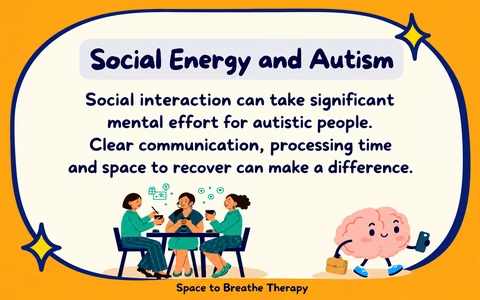
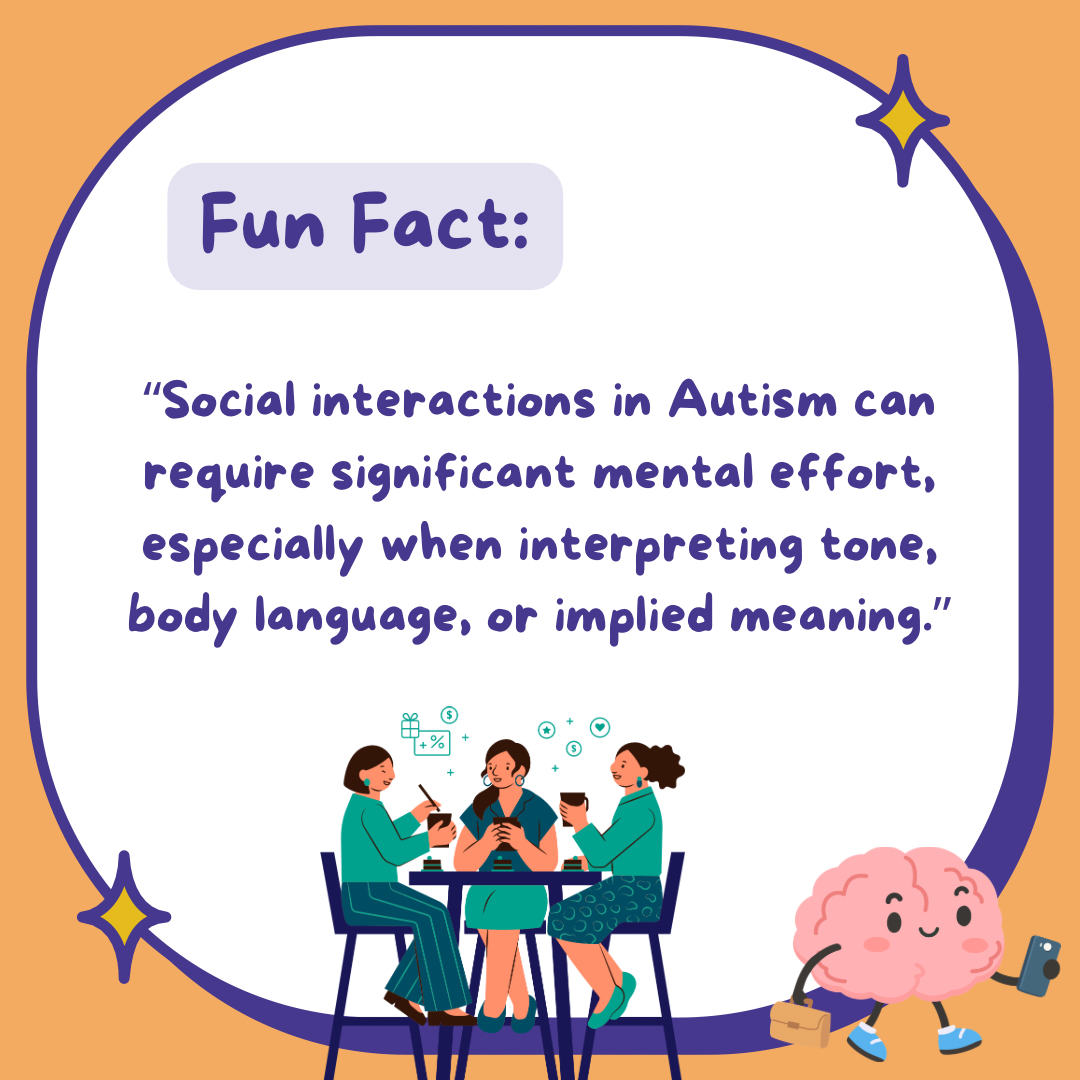
Social interaction can involve significant mental effort for autistic people, including processing language, tone, implied meaning or sensory information. Experiences differ. You may enjoy company and still need pauses or recovery time.
What adds to the effort?
Tap a situation for a supportive possibility. Choose what fits your experience.
Which situation feels familiar?
Plan around your energy
Your needs matter before, during and after an interaction.
Understanding goes both ways
Communication differences do not mean someone is uncaring or uninterested. Other people can help by using direct language, allowing time and respecting different ways of responding. Speech, writing, gestures and communication aids are all valid.
This is not a lesson in appearing less autistic. The aim is to reduce unnecessary demands and support the kinds of connection you want. You can adapt any idea with a trusted supporter.
My social energy and communication plan
Complete only what is useful. Your writing stays on this page while it is open and is not saved automatically. Download a copy to keep or share it.
Further information
This activity supports reflection and does not assess autism or social ability.
National Autistic Society: autism and communication
NHS: autism in adults