





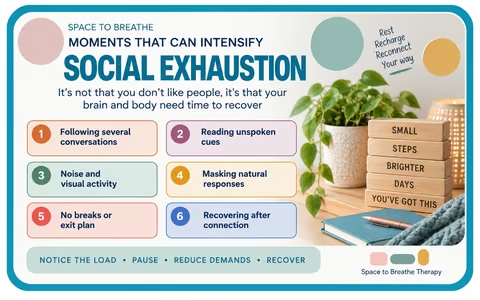
SOCIAL EXHAUSTION — MOMENTS THAT CAN INTENSIFY IT
Social exhaustion is not necessarily about disliking people or wanting to avoid connection. Sometimes the brain and body are simply carrying far more social, cognitive and sensory work than other people can see.
This full Space to Breathe Therapy guide explores six pressure points: following several conversations, reading unspoken cues, noise and visual activity, masking natural responses, having no breaks or exit plan, and needing recovery after connection.
Inside, the guide looks at what social exhaustion can feel like, ways to reduce the load before and during social contact, the importance of recovery afterwards, support for partners and families, and workplace or education considerations. It also contains a detailed Social Energy & Recovery Map, a message from Maggie, book recommendations and professional information.
The guide recognises that ADHD can affect attention and social functioning, while sensory and social-communication demands may also be relevant for autistic people and those with overlapping neurodivergence. It avoids treating social exhaustion as a diagnostic sign in itself.
The central message is simple: you can value connection and still need recovery from it. Building breaks, choice and decompression into social plans can make connection more sustainable.
This resource is psychoeducational and is not a diagnostic checklist or a substitute for individual medical or mental-health advice.