





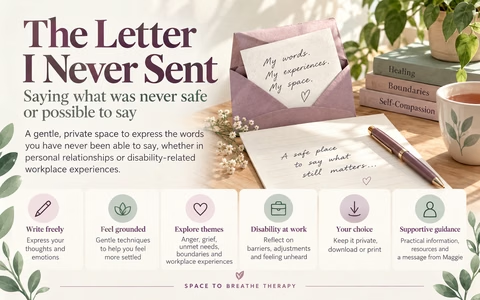
The Letter I Never Sent
A private space for feelings, experiences and words that have never had somewhere safe to land. You do not need to send your letter, explain yourself, forgive anyone or finish writing.
What is your letter about?
Choose the area that feels closest to your experience. You can change your mind at any time.
Before you begin
Writing about painful experiences may bring up difficult feelings. Your wellbeing matters more than finishing this exercise.
You may pause, change the subject, write only a sentence, or decide not to write at all.
A moment to feel grounded
Before or during writing, you can return to the present moment. Keep your eyes open if that feels safer, and choose only techniques that suit you.
Who is this letter for?
You do not need to use a real name. You can write to a person, workplace, situation, an earlier version of yourself or no one in particular.
Find the words you need
Choose a theme for optional sentence starters. Selecting one adds it to your letter, where you can change or remove it.
My unsent letter
There is no correct way to write this. It does not need to sound professional, reasonable, calm or forgiving.
Your words can remain unfinished and permanently unsent.
After writing: how am I feeling?
Separating feelings from practical workplace needs
Your letter can express how an experience affected you. This separate section can help you identify what you might want to do next, without turning the letter itself into formal correspondence.
What would I like to do with my letter?
There is no requirement to send it, show it to anyone, forgive someone or reopen contact.
A personal perspective
“I spent a long time trying to find the right words. When I finally wrote everything down, I realised I did not actually need the other person to read it for my feelings to matter. I kept the letter for myself.”
Illustrative anonymous-style perspective; not presented as a verified client testimonial.
A message from Maggie
There are times when we carry the weight of words that have never been spoken. Sometimes we were not listened to, sometimes we were afraid of what might happen, and sometimes we simply did not have the words at the time.
For people who have experienced disability-related barriers, exclusion or feeling misunderstood at work, those unspoken words can be especially difficult to carry.
This space is here to help you express what matters to you, without needing to explain, minimise or justify how you feel. Your experiences deserve acknowledgement, and you can decide what happens next.
You do not need to finish your letter. You do not need to send it. It belongs to you.
Maggie Learoyd
Space to Breathe Therapy
Further reading and support
Writing can help some people organise thoughts and explore emotional experiences, but it is not suitable for everyone at every moment. These resources offer further perspectives and practical support.
- Expressive Writing: Words That Heal — James W. Pennebaker and John F. Evans.
- Self-Compassion — Kristin Neff.
- Set Boundaries, Find Peace — Nedra Glover Tawwab.
- Acas — workplace rights, reasonable adjustments, grievances and dispute resolution.
- Equality Advisory Support Service — equality and discrimination guidance.
- Citizens Advice — employment and other practical advice.
Research background: Pennebaker and Beall (1986), on expressive writing and traumatic experience; Frattaroli (2006), a meta-analysis of experimental disclosure studies. Evidence suggests potential benefits for some people, but effects vary and writing can also temporarily increase distress.
When additional support is needed
If writing brings up intense distress, stop and return to activities or people that help you feel safe. You might prefer to explore the experience with a qualified professional.
In the UK, Samaritans can be contacted on 116 123. For immediate danger, call 999. For urgent NHS mental-health help in England, call 111 and select the mental-health option.
This educational tool does not replace therapy, medical advice, legal advice or urgent mental-health support.
For therapeutic support, visit Space to Breathe Therapy.
My private writing space
Download your letter and reflections to keep a personal copy. Your information stays in this browser unless you choose to download, print or share it.
Entries are stored only in this browser on this device, using local storage. They are not password-protected or synchronised between devices. Other users of a shared device or browser profile may be able to access them. Private browsing, browser settings or clearing website data may remove them. Downloaded files are not encrypted.




