Family & loved ones support
Understanding Dissociation
A gentle introduction to recognising experiences and offering support
Dissociation can affect how a person experiences their thoughts, feelings, memories, body or surroundings. They may describe feeling distant, disconnected, on autopilot, or as though the world around them does not feel quite real. These experiences can be confusing or frightening, both for the person and for those who care about them.
What might you notice?
Someone may become unusually quiet, struggle to follow a conversation, lose track of time, seem emotionally distant or have difficulty describing what is happening. Experiences vary considerably. Dissociation is not a choice, and what looks like disinterest may actually be a sign that someone is struggling.
How can you help?
Remain calm, speak gently and avoid demanding an immediate explanation. You might ask, “Would you like me to stay with you?” or “Would it help if we moved somewhere quieter?” Offer choices rather than instructions. Grounding techniques can help some people, but always ask what feels safe and useful to them.
Remember: You do not need to understand every detail of someone's experience to respond with patience, respect and reassurance. Ask what support they prefer when they feel able to talk.
When is more support needed?
If episodes are recurring, distressing, affecting daily life or linked with trauma, encourage a conversation with a GP or qualified mental health professional. New or sudden confusion, loss of consciousness, or other concerning physical symptoms require prompt medical assessment rather than assuming dissociation is the cause.
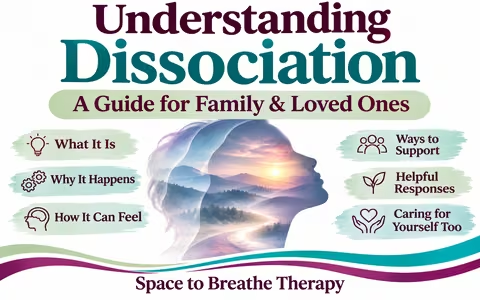
Read the full PDF guide above ↑The downloadable three-page Understanding Dissociation — A Guide for Family & Loved Ones explores why dissociation can happen, what it may feel like, supportive responses, everyday adjustments and when to seek professional help.