



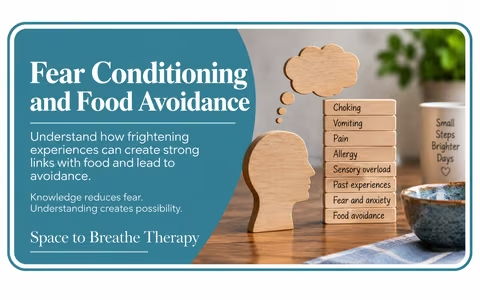
Fear Conditioning and Food Avoidance
After choking, vomiting, pain, allergy, sensory overload or another frightening experience, food can become paired with danger.
I created this resource because fear can make life feel smaller very quietly. It may begin with one difficult place, sensation or memory, then gradually affect the journeys we take, the choices we make and how much support we feel we need. If this is familiar, I want you to know that your response makes sense. Your nervous system has been trying to protect you.
This page is not about forcing yourself through distress or proving that you are brave enough. It is an invitation to understand the pattern with kindness. When we can name a trigger, the prediction attached to it, what happens in the body and the action that follows, the fear becomes less mysterious. That understanding can create a small space in which a different choice becomes possible.
Exposure-based approaches are commonly used within cognitive behavioural therapy for phobias and agoraphobia. The important words are planned, gradual and collaborative. A useful step should be safe, personally meaningful and small enough to repeat. The goal is not to remove every anxious feeling. It is to build new learning: sensations can change, uncertainty can be carried, and you may have more choices than fear suggests.
What you will find on the one-page resource
· How the association forms: A food, texture, smell, place or body sensation becomes a warning cue. Avoidance then brings relief and may strengthen the association.
· ARFID is broader than fear: Avoidant/restrictive food intake disorder can also involve sensory sensitivity or low interest in eating. It is not simply “fussy eating” or a choice.
· Support must be safe: Allergies, intolerances, swallowing problems, gastrointestinal symptoms and nutritional needs require proper assessment. Never expose someone to a medically unsafe food.
· A compassionate pathway: Protect reliable safe foods, reduce shame, identify the exact fear, build predictability, and work with appropriately trained eating-disorder and dietetic professionals.
How I suggest using it
Choose a settled moment rather than your most distressed one. Read the page once without completing anything. Then return to only one prompt. Write in plain words, use a 0-100 rating if that helps, and stop when you have enough. You can bring the page to therapy, use it to explain your experience to someone you trust, or revisit it after a practice to notice what you learned.
Please keep accessibility, sensory needs and genuine health considerations in the picture. A support person, quieter time, planned route or communication aid may be a reasonable adjustment, not something to remove. The task is to distinguish support that opens life from a ritual that fear insists is the only reason you survived.
Food avoidance needs particular care. Safe foods should not be removed, and suspected allergy, intolerance, swallowing difficulty, gastrointestinal symptoms or nutritional risk should be assessed. ARFID can involve fear of consequences, sensory sensitivity, low interest in food, or a combination; it is not a lack of effort.
A gentle reminder from me
You do not have to complete every box, climb every step or do this alone. Progress may look like understanding yourself better, asking for support, staying for one extra minute, or deciding that today is a day for preparation rather than practice. Small steps still count.
When to seek more support
Speak with a GP or qualified mental-health professional if fear or avoidance is affecting daily life. New, severe or unusual physical symptoms need medical assessment rather than being assumed to be anxiety. If you are in immediate danger or cannot keep yourself safe, call 999 or go to A&E; for urgent mental-health help in England, contact NHS 111 and select the mental health option.
Trusted information
NHS: Phobias; Agoraphobia - treatment; Every Mind Matters - Facing your fears. NICE guideline CG113: panic disorder with or without agoraphobia. For ARFID information: Beat Eating Disorders.
Until next time, give yourself space to breathe.
Maggie Learoyd