




The Agoraphobia Cycle
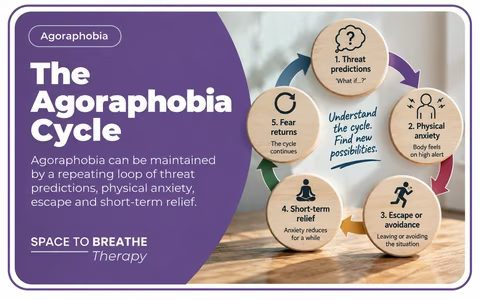
Agoraphobia can be maintained by a repeating loop of threat predictions, physical anxiety, escape and short-term relief.
I created this page because fear can quietly make a person’s world smaller. The physical reaction is real, and avoidance often begins as a sensible attempt to feel safe. There is no shame in that response. Understanding the trigger, the prediction and what happens next can help fear feel less mysterious and open a little more choice.
What this resource helps you notice
· Trigger: A place or situation where escape, help or safety may feel difficult - such as crowds, transport, queues or being far from home.
· Threat response: The mind predicts panic, collapse, embarrassment, being trapped or being unable to cope; the body prepares for danger.
· Safety response: Escape, avoidance, reassurance, checking routes, staying near exits or relying on rituals brings understandable relief.
· New learning: A small, planned approach can test the prediction while keeping genuine medical and accessibility support in place.
How I suggest using it
Read the page once without trying to solve everything. Return to one prompt that feels most relevant and write only what you can notice today. Use simple words, approximate amounts or a 0-10 rating if that makes the experience easier to capture. Bring the completed page to therapy, a GP appointment or specialist support if you would like help turning insight into a plan.
Exposure work should be planned, gradual and never involve genuine danger. Keep necessary medical, sensory and accessibility adjustments in place, and seek professional support if fear is significantly restricting life.
A gentle reminder from me
Change does not have to begin with a dramatic promise. It may begin with telling the truth on paper, recognising a warning sign, asking someone to stay with you, repeating one manageable practice or reconnecting with support after a difficult day. Information is not failure. It is something you can use.
Support: speak with your GP or self-refer to NHS Talking Therapies. New or severe physical symptoms should be medically assessed rather than automatically assumed to be anxiety.
Until next time, give yourself space to breathe. - Maggie