






Welcome · From pressure towards understanding
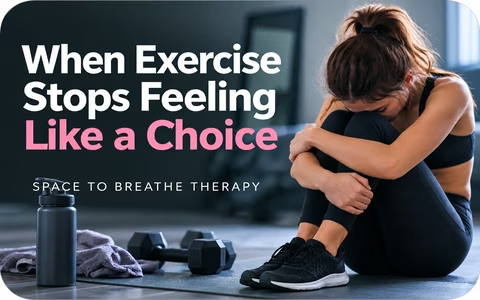
When exercise stops feeling like a choice
An interactive space to explore the pressure to keep moving, the fear of stopping and the difficult feelings that can sit behind compulsive exercise in eating disorders.
Perhaps it started innocently
You found a routine you liked. Movement gave you structure, a little relief, or a sense of control. But somewhere along the way, what was once a choice may have become a rule. Missing exercise no longer feels like simply changing a plan. It can feel like you have done something wrong.
This resource is about recognising that change, without judgement or blame.
You can read the chapters, answer gentle questions, explore situations, write your own reflections and create a personal support plan. You are free to skip anything.
This is a reflective educational guide, not a diagnosis or permission to exercise. Eating disorders can make movement medically unsafe, including when someone looks well. If you are unwell, injured, undernourished or have been advised to stop exercising, follow your care team's guidance. For chest pain, fainting, collapse or serious symptoms, seek urgent medical help (999 in an emergency).
Chapter one · Understanding the shift
When movement changes its meaning
The difference between choice and compulsion is not simply how much exercise somebody does.
Choice
Plans have some flexibility. You can recognise physical needs and respond to changes without feeling that your worth is at stake.
Compulsion
Exercise feels compulsory. Rest brings guilt or fear. Food, body image or emotional safety may become tied to completing it.
Compulsive exercise can mean training, walking, pacing, repeated standing, taking long routes or quietly adding movement throughout the day. You may be struggling even if your activity looks ordinary to others.
Routine is not automatically harmful. Movement may also be important for disability, sensory regulation or enjoyment. What matters is the distress, rigidity, physical safety and impact on your life.
Chapter two · What can be difficult to see
Hidden warning signs
Compulsion can live in thoughts, feelings and the small decisions of everyday life.
The mind
Rules like “I have to finish,” “I mustn't miss a day,” or “I've not done enough” occupy more and more attention.
The emotions
Missing an activity brings anxiety, guilt, shame, irritability or a feeling of losing control.
The body
Injury, pain, fatigue, hunger or illness get overridden because the rules feel more urgent.
The everyday
Social invitations, recovery needs, relationships or time for rest become harder to fit around exercise.
When food becomes linked to exercise
For some people, eating brings an urgent need to compensate. For others, the urge follows body-image distress, a binge episode, a sense of having broken a rule, or the fear of losing an exercise routine. It can appear across eating disorders, including anorexia, atypical anorexia, bulimia, binge eating disorder, OSFED and other presentations. Not everyone with these conditions experiences compulsive exercise.
Chapter three · The feelings beneath
What might be going on under the surface?
What others see is not always what the person experiencing a compulsion feels.
Fear
“If I stop, something bad will happen.” The feeling can be powerful even if it is difficult to explain.
Guilt
Exercise may feel like payment for food or a way to erase something you feel ashamed about.
Regulation
Movement can temporarily soften difficult feelings, racing thoughts or sensory overwhelm.
Identity
The routine can become part of how you understand yourself or measure whether a day has been good enough.
Chapter four · Gentle interactive reflection
Does exercise still feel like a choice?
There are no scores, labels or diagnoses here. These prompts help you put words to an experience that can be hard to explain.
If movement feels distressing, rigid or medically unsafe, you are allowed to ask for support regardless of how others see it.
Chapter five · Real-life moments
What happens when an ordinary day changes?
Read each situation and select the response closest to how you might feel. Every option offers a compassionate perspective.
Chapter six · Compassionate alternatives
When the urge to move arrives
If exercise has become your main way of coping, simply being told to stop can bring intense distress. Support should recognise this.
These activities are not an exercise plan or a substitute for treatment. If a clinician has advised rest or stopping exercise, follow that advice. Emotional support can help you through the discomfort of changing compulsive patterns.
What feeling needs attention?
Choose a feeling to explore some supportive possibilities.
Exploring the rules
Select a rule to explore a gentler response.
Chapter seven · You don't have to manage this alone
Finding the words to ask for help
It can be frightening to tell someone that exercise is becoming difficult to control, especially if they have praised your commitment.
Something you could say
“I think movement has stopped feeling like a choice for me. I feel anxious or guilty when I cannot do it, and I need help understanding what is happening.”
For your GP or treatment team
“I am concerned that exercise may be linked to my eating disorder. I need help assessing whether movement is medically safe and support with the distress I feel when I try to rest.”
For family, friends and supporters
- Listen without praising exercise discipline, physical appearance or weight changes.
- Ask how the person feels when they cannot move, rather than focusing only on how much activity they do.
- Avoid bargaining over exercise or encouraging exercise as a reward.
- Support medical review and specialist eating disorder treatment.
- Understand that reducing compulsion can temporarily increase distress.
- Offer reassurance, practical support and time together without performance expectations.
Speak to a GP or eating disorder care team about compulsive exercise, particularly if you have physical symptoms or are restricting food. You can also find information and support from Beat. For urgent physical concerns, seek urgent medical advice; for an emergency call 999.
If you would like a place to talk about food, body image, anxiety, movement and the rules that have built up around them, you can explore therapeutic support through Space to Breathe Therapy.
Visit Space to Breathe Therapy ↗Space to Breathe Therapy
My personal reflection and support plan
Chapter eight · Your own words
My reflection and support plan
A place to gather what you have noticed and what you would like someone to understand. This is not an exercise schedule or a plan for increasing activity.
Take this with you
Food does not have to be earned. Rest is not a failure. Your worth does not depend on how much you move. Recovery is allowed to include uncertainty, sadness and the need for help.
Where permitted, answers are saved in this browser only. They are not sent to Space to Breathe Therapy. Avoid typing private information on shared devices. Printing uses your browser's print or save-as-PDF option.




