





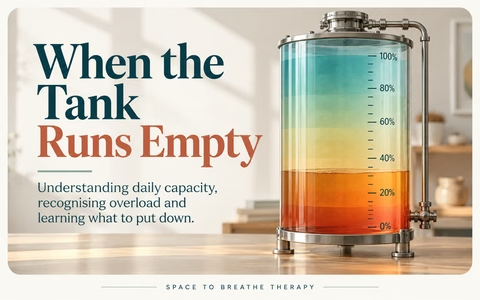
When the Tank Runs Empty
Recognise your capacity, notice when you're speeding up, and learn what you can put down before you have nothing left.
Everybody's tank is different
You may wake feeling capable of handling everything, or you may start with very little capacity. You don't have to wake up with a full tank.
What does your tank look like today?
Move this anywhere from 0 to 100. This is your personal estimate, not a target.
My capacity so far
The tank is illustrative. It is not measuring your nervous system or calculating a clinical energy score.
What is happening throughout my day?
Choose what is happening to you. Each answer changes your tank. Some experiences take more capacity than others, and some can restore it.
My daily timeline
A visual record of your estimated capacity as you make choices.
1. How did I wake up?
2. What is happening around me?
3. How demanding does today feel?
Am I speeding up or slowing down?
Sometimes our behaviour changes before we realise how much capacity we've used.
Choose what you're noticing. These signs also influence your tank's visual estimate.
Signs that I might be speeding up
Signs that I might be switching off
What am I carrying that I don't need to?
Not everything needs to be finished today. You can choose which responsibilities to keep, reduce, postpone safely, or share.
Keep
Make smaller or share
Not today
Not mine to carry
Add something personal
What helps me regain capacity?
Restoration is personal. Some people need quiet, some need movement, some need support, and others need a meaningful activity that feels comfortable.
Choose what actually helps you, not what you think should help.
What if nothing restores my tank?
Sometimes a short pause cannot reverse exhaustion, illness, overload or burnout. That doesn't mean you have failed.
You may need longer recovery, fewer demands or additional support. There is no requirement to reach 100%.
No timer. No task. No need to explain.
When I cannot find the words
Choose what you would like someone else to understand. Your answers will create a communication card.
My communication card
What have I learned about my capacity?
You can reflect on your experience, or leave these questions unanswered if you have had enough for today.
My personal capacity plan
Here is a summary of your answers and choices.
Before you leave
You do not have to wait until you are overwhelmed before your needs become important.
Sometimes the most supportive thing you can do is remove a demand before it takes the last of your capacity.
You are allowed to have a life that makes room for you, too.
My Personal Capacity Plan




