


Yoga for Anxiety

Yoga for Anxiety

Calm Your Mind, Soften Your Body and Breathe Again

Anxiety does not only affect our thoughts. It can be felt throughout the whole body—through a racing heart, tense muscles, shallow breathing, restlessness, stomach discomfort or a constant feeling that something is about to go wrong.

When anxiety takes hold, yoga can offer a gentle way to pause and reconnect with the present moment. It is not about forcing yourself into difficult positions or trying to empty your mind. It is about noticing what your body needs and giving yourself permission to slow down.

How yoga may support anxiety

Gentle yoga combines movement, breathing and focused attention. Together, these can help you:

  • Release some of the physical tension held in your body.
  • Slow racing or repetitive thoughts.
  • Feel more grounded and connected to the present.
  • Develop a kinder awareness of your emotions and physical sensations.
  • Create a calming routine before sleep.
  • Recognise when you need to pause, rest or ask for support.

You do not need to be flexible, experienced or physically strong. Yoga can be adapted to suit different bodies, abilities and energy levels. You may practise standing, seated on a chair or lying down—whatever feels safest and most comfortable for you.

Begin with your breath

If movement feels too difficult, begin with one slow breath.

Try breathing in gently through your nose for four counts, holding for four if this feels comfortable, and breathing out slowly for six counts. Repeat this three to five times without forcing your breath.

A longer exhale can encourage the body to soften, but breath-holding does not suit everyone. If you feel dizzy, uncomfortable or more anxious, return to your natural breathing pattern.

Gentle poses to explore

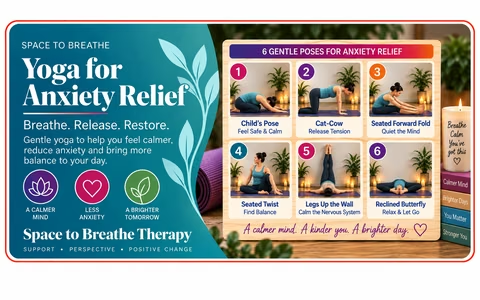
Child’s Pose, Cat–Cow, a supported forward fold, Legs Up the Wall and Savasana can all provide opportunities to rest and release tension. You do not have to complete every pose or follow a particular order.

Move slowly and listen to your body. A cushion, blanket, chair or wall can provide additional support. Stop if anything causes pain, dizziness, numbness or discomfort.

Even five minutes of gentle movement or conscious breathing can be meaningful. Some days you may want a longer practice; on others, simply sitting quietly and noticing your breath may be enough.

A supportive message from Maggie

I know anxiety can make everything feel urgent and overwhelming. It may tell you that you should be coping better or doing more. Please remember that you do not have to solve everything at once.

Yoga is not about getting it right. It is an invitation to come back to yourself with patience and compassion. Begin where you are, move in the way that feels right for you and allow rest to be part of the practice.

You are not failing because you need to pause. Sometimes the smallest act of slowing down is a powerful form of self-care.

If anxiety is persistent, worsening or affecting your daily life, please speak to your GP or another qualified professional. Yoga can be a supportive tool, but it is not a replacement for medical or therapeutic care.

Until next time, give yourself space to breathe.

With love,
Maggie