





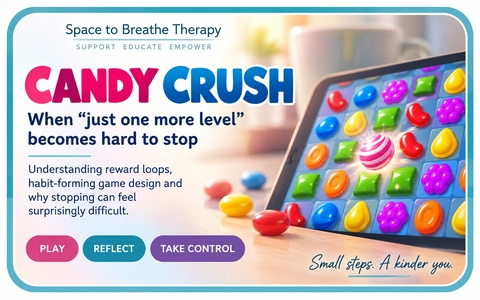
CANDY CRUSH — WHEN “JUST ONE MORE LEVEL” BECOMES HARD TO STOP
Candy Crush can be a quick distraction, a relaxing puzzle or simply something enjoyable to do. But what happens when ten minutes repeatedly becomes an hour, stopping feels frustrating, sleep is pushed later, or the game becomes the place you automatically go whenever you feel stressed, bored, lonely or overwhelmed?
This resource looks beyond the idea that gaming is simply “good” or “bad”. It explores the reward loops and repeated stopping-and-starting patterns that can make mobile puzzle games difficult to put down, while being careful not to label ordinary enjoyment or frequent play as addiction.
Inside the downloadable guide you will find:
• an explanation of why “one more level” can feel so compelling;
• signs that gaming may be beginning to interfere with everyday life;
• a self-check to explore control, time, emotions and what gaming may be displacing;
• practical ways to create clearer stopping points and reduce automatic play;
• ideas for replacing the function gaming may be serving rather than relying on willpower alone;
• guidance on when it may be useful to seek professional support;
• clinical context around WHO’s definition of gaming disorder; and
• a personal message encouraging curiosity rather than shame.
The aim is not to tell people that they should stop playing. It is to help someone notice whether gaming still feels like a choice and to recognise when additional support might be helpful.
Space to Breathe Therapy
Support Hub




