

THE DIFFERENCE BETWEEN MISUSE AND ADDICTION

Download

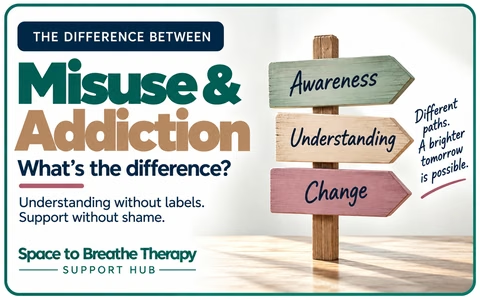
THE DIFFERENCE BETWEEN MISUSE AND ADDICTION


People often use the words misuse, dependence and addiction as though they mean the same thing. They can overlap, but they describe different parts of somebody’s experience. I created this one-page guide to explain those differences without judgement and to show that support can begin long before somebody reaches a crisis.


I want to begin by taking shame out of this conversation. Misuse and addiction are not descriptions of somebody’s value, strength or character. They are ways of understanding what is happening around a substance, medicine or behaviour so that the right kind of support can be offered.

Misuse, sometimes described as risky or harmful use, means that something is being used in a way that creates risk or is already causing harm. That might include using more than intended, mixing substances, using in an unsafe situation, taking medication differently from the instructions, or continuing despite effects on health, finances, work or relationships. A person can misuse something without being addicted to it, but the harm still deserves attention.

Addiction involves a growing loss of control. Somebody may experience strong urges or cravings, repeatedly try to reduce or stop but find that they cannot, and continue even when the consequences are clear. The substance or behaviour may begin to take priority over responsibilities, relationships and things the person once enjoyed. Addiction is not defined only by using every day, and somebody does not need to “hit rock bottom” before their experience is serious enough for help.

Dependence is another related but different idea. The body or mind has adapted to a substance. Tolerance may develop, meaning that more is needed to achieve the same effect, and withdrawal symptoms may appear when the substance is reduced or stopped. Dependence can happen with prescribed medication taken for a long time and does not automatically mean that somebody has an addiction. It does mean that changes may need to be planned safely with medical support.

Rather than becoming trapped by a label, I encourage people to ask gentler and more useful questions. Can I freely choose not to use? Have I tried to cut down and found that I could not? Am I hiding it or organising my life around it? Has it become my main way of managing emotions, trauma, pain, sensory overwhelm or exhaustion? Is it affecting my safety, health, money, work or relationships?

You can ask for help at any stage. A GP, pharmacist or local drug and alcohol service can help you understand risk, review medication, reduce harm and make a safe plan. You can still ask for support if you are not ready to stop completely. If you may be physically dependent on alcohol, please do not stop suddenly because withdrawal can be dangerous. Seek medical advice first. Call 999 for seizures, hallucinations, severe confusion, collapse or unconsciousness.

My hope is that this resource helps somebody move from “What is wrong with me?” to “What has this been doing for me, what is it costing me now, and what support would help?” Understanding the pattern is not an accusation. It can be the beginning of choice and change.

Important information
This resource provides general education and emotional support. It does not diagnose addiction or dependence and does not replace individual advice from a GP, pharmacist, drug and alcohol service or emergency service.