





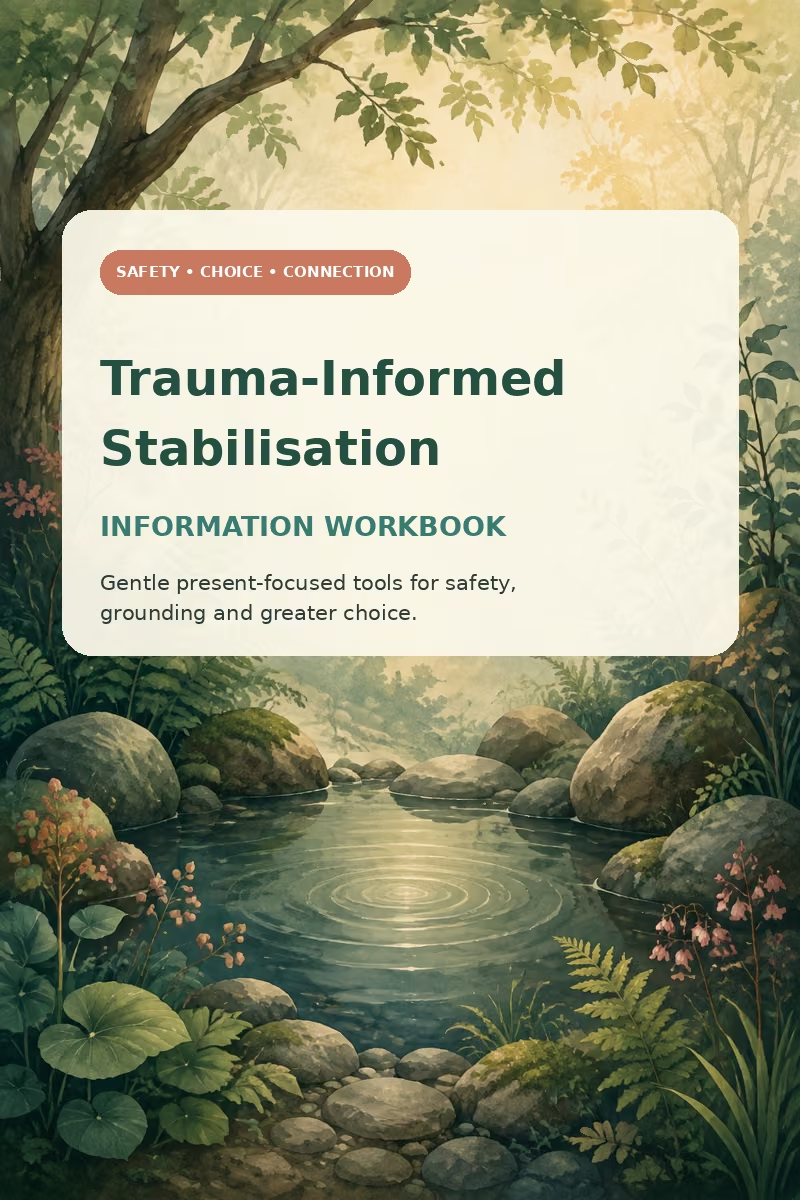
TRAUMA-INFORMED STABILISATION WORKBOOK
The Trauma-Informed Stabilisation Workbook is a gentle, present-focused six-page resource for adults who experience trauma-related distress, overwhelm, hypervigilance, shutdown, dissociation or difficulty feeling safe in the here and now.
Stabilisation is often an important foundation of trauma-informed support. It does not require someone to describe what happened, revisit traumatic memories or push beyond their capacity. Instead, it supports present-day safety, choice, nervous-system awareness, grounding and access to appropriate support. Throughout the workbook, readers are reminded that they may pause, adapt or stop any exercise.
The workbook begins by explaining stabilisation and helping readers identify what creates even a small increase in safety. A personal permission slip reinforces choice and consent. Readers then map their own high-activation, more-present and shutdown responses, including the earliest signs that distress is beginning to rise.
A varied menu of present-focused techniques includes orienting to the room, noticing neutral details, feeling physical support, using rhythm, reducing stimulation and gently increasing energy after shutdown. The emphasis is on experimentation rather than forcing a particular technique. If an exercise increases distress, the reader is encouraged to stop and choose a different form of support.
The containment page introduces a careful, temporary way of holding distressing material until the reader chooses a safer time and appropriate support. Everyday anchors such as nourishment, rest, medication as prescribed, movement, connection, predictability and recovery time are also included.
The final page brings the workbook together in an individual stabilisation and support plan. It provides space to record warning signs, grounding tools, safer people and places, instructions for supporters, immediate next steps and a compassionate reminder. Clear urgent-support information is included.
Inside the workbook:
- Understanding trauma-informed stabilisation
- Choice, consent and permission to pause
- Identifying what increases present-day safety
- Mapping high activation, shutdown and a more-present state
- Recognising early warning signs
- Orienting, grounding and body-based support
- Settling activation and gently lifting shutdown
- Careful containment of distressing thoughts or images
- Everyday anchors for greater stability
- Planning recovery after difficult moments
- Creating a personalised stabilisation and support plan
- UK urgent-help information
This resource may be used independently, alongside trauma-informed therapy or counselling, or with a trusted supporter. It is designed as an educational and reflective aid rather than a replacement for individual assessment or treatment.
Please note: This workbook is not intended for trauma processing, exposure work or recovering detailed memories. Some grounding exercises do not suit everyone. Readers should stop if an activity increases distress and seek support from a qualified trauma-informed professional when needed. If someone cannot keep themselves safe or is in immediate danger, call 999 or go to A&E. Samaritans can be contacted free, day or night, on 116 123 in the UK and ROI.