





PHANTOM PREGNANCY - UNDERSTANDING PSEUDOCYESIS
Phantom pregnancy, medically known as pseudocyesis, is a rare and often deeply misunderstood experience. A person may genuinely believe they are pregnant and experience physical pregnancy-like changes even though medical assessment confirms that a pregnancy is not present.
This is not the same as somebody deliberately pretending to be pregnant.
Symptoms can include missed or altered periods, abdominal enlargement, breast changes or tenderness, nausea, appetite and weight changes, fatigue and sensations interpreted as fetal movement. Because pregnancy-like symptoms can also have other physical causes, proper medical assessment is important.
There is no single explanation for pseudocyesis. The brain, emotions, nervous system, hormones and body influence one another in complex ways. Fertility experiences, previous pregnancy loss, grief, trauma, anxiety, depression, severe stress, a powerful wish for pregnancy or even an intense fear of pregnancy may be relevant for some people. None of these should simply be assumed.
The most important thing is that the person is treated with dignity.
Being told that there is no pregnancy can create a profound emotional shock. Somebody may have already imagined a due date, appointments, names, family changes and a future with a baby. They may also suddenly question whether they can trust their own body.
The grief that follows deserves acknowledgement.
THERAPY AND SUPPORT
Support may include person-centred counselling, grief-informed counselling, trauma-informed therapy, couples counselling or specialist reproductive/perinatal psychological support depending on the person's individual experience. Psychological support should sit alongside appropriate medical care rather than replacing it.
A MESSAGE FROM ME
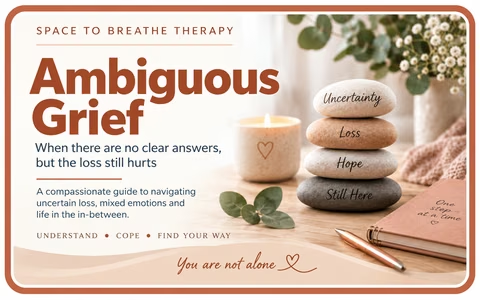
When there are no clear answers, but the loss still hurts
Some losses do not come with a clear ending. A person may still be physically present but profoundly changed, someone may be absent without certainty, a relationship may exist in an unresolved in-between, or life may have changed in a way that leaves you grieving something you cannot neatly name.
This stand-alone guide explores ambiguous grief and the work of Pauline Boss on ambiguous loss. It explains why uncertainty can make grief especially exhausting and why people can become caught between hope and sorrow, holding on and moving forward.
Inside the full PDF, we explore the two broad forms of ambiguous loss, conflicting emotions, mental searching, identity changes, relationship strain and the pressure to find “closure”. There is practical guidance for living alongside uncertainty without allowing it to consume every part of life.
The resource includes strategies for separating what is known from what remains unknown, creating boundaries around searching and reassurance, allowing contradictory feelings to coexist, maintaining everyday life, and finding support that does not rush to fix the situation.
You will also find a full reflection worksheet, guidance for family and friends, therapeutic considerations, recommended books, theoretical notes and references, and a personal message from Maggie.
This is not a guide about giving up hope or forcing yourself to move on. It is about finding a way to keep living when some answers may not yet exist.
Space to Breathe Therapy