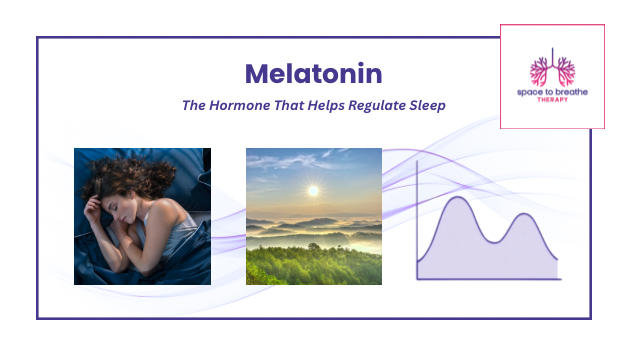
Melatonin is a hormone produced by the pineal gland in the brain, released primarily in response to darkness and responsible for signalling to the body that it is time to sleep. It is a central part of the circadian rhythm — the internal 24-hour clock that regulates sleep-wake cycles, body temperature, digestion, and many other biological processes. Melatonin production naturally rises in the evening, peaks during the night, and drops again in the morning as light exposure increases. Factors such as artificial light (particularly blue light from screens), shift work, jet lag, stress, and ageing can all disrupt melatonin production and therefore sleep quality.
Poor sleep has profound effects on mental health — increasing vulnerability to anxiety, depression, irritability, poor concentration, and emotional dysregulation. Conversely, mental health difficulties often disrupt sleep, creating a challenging cycle. Melatonin supplements are widely used to support sleep, but addressing the underlying causes of disrupted sleep — through sleep hygiene, stress reduction, trauma processing, or nervous system regulation — can be more sustainable. Therapy can offer a safe space to explore the relationship between sleep, stress, and emotional wellbeing as an integrated whole.
Zisapel, N. (2018). New perspectives on the role of melatonin in human sleep, circadian rhythms and their regulation. British Journal of Pharmacology, 175(16), 3190–3199. https://doi.org/10.1111/bph.14116