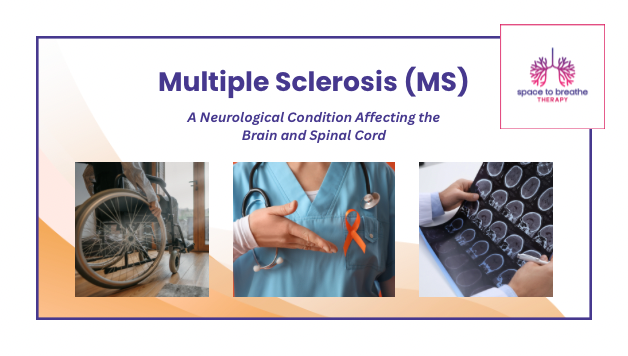
Multiple Sclerosis (MS) is a chronic neurological condition in which the immune system attacks the myelin sheath — the protective covering of nerve fibres in the brain and spinal cord. This disrupts the transmission of nerve signals, leading to a wide range of symptoms that vary greatly between individuals. Common experiences include fatigue, difficulty walking, muscle weakness or spasms, vision problems, bladder and bowel issues, pain, and cognitive changes. MS typically follows one of several patterns — relapsing-remitting, primary progressive, or secondary progressive — meaning the course of the condition is often unpredictable, adding to its emotional complexity.
Receiving an MS diagnosis can be profoundly life-altering, and the psychological impact is significant. Studies suggest that depression and anxiety are more common in people with MS than in the general population, and adjusting to changes in function, identity, relationships, and future plans can be an ongoing process. Therapy can provide a grounded, compassionate space to process loss, develop coping strategies, and live as fully as possible with a condition that requires constant adaptation.
Siegert, R. J., & Abernethy, D. A. (2005). Depression in multiple sclerosis: a review. Journal of Neurology, Neurosurgery & Psychiatry, 76(4), 469–475. https://doi.org/10.1136/jnnp.2004.054635