



























.jpg)
1) What it is (simple explanation)
Generalised Anxiety Disorder (GAD) is a mental health condition where worry becomes frequent, intense, and difficult to control, even when there is no immediate threat. Instead of worrying occasionally about real problems, your brain becomes stuck in a pattern of scanning for danger and predicting worst-case scenarios.
GAD often feels like your mind is constantly trying to:
prevent something bad from happening
prepare for every possible outcome
make sure you don’t get caught out
keep everyone safe
avoid making mistakes
The worry can move from one topic to another, such as:
health worries
money worries
work or performance worries
family and relationship worries
safety concerns (accidents, illness, emergencies)
GAD isn’t a personality flaw or “overreacting.”
It’s often a sign that your nervous system has become overprotective and is operating in high-alert mode.
2) What it feels like (real-life examples)
People describe GAD in very human, everyday ways. For example:
“I can’t relax even when everything is fine.”
“I’m always bracing for bad news.”
“My brain never stops thinking.”
“I worry about things other people don’t seem bothered by.”
“I feel guilty because I should be grateful, but I still feel anxious.”
“I keep thinking ahead to everything that could go wrong.”
You may also experience high-functioning anxiety, where you look organised on the outside but feel overwhelmed inside. That can sound like:
“I keep going, but I’m exhausted.”
“I’m constantly holding it together.”
“I feel like I’m failing, even though I’m doing a lot.”
3) Common signs & symptoms
GAD affects the mind, the body, and behaviour.
Mental & emotional symptoms
constant worry that feels hard to stop
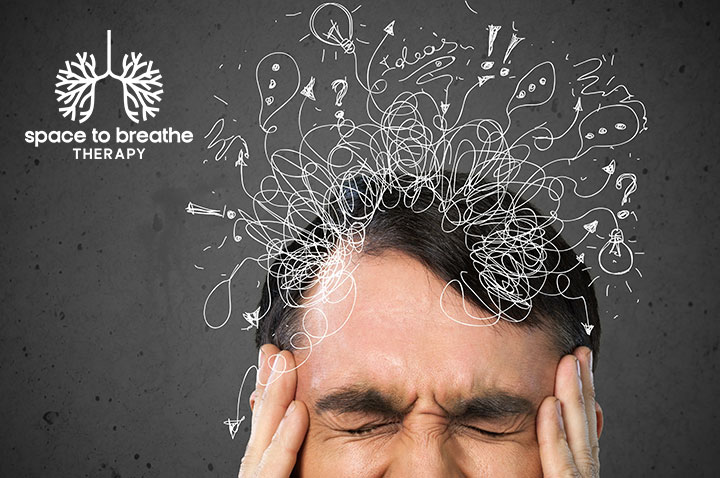
overthinking and rumination (“thought loops”)
catastrophising (jumping to worst-case outcomes)
fear of uncertainty or the unknown
irritability, feeling easily overwhelmed
difficulty concentrating or “brain fog”
feeling restless, on edge, or unable to settle
needing reassurance but not feeling relieved for long
Physical symptoms
GAD can strongly affect the body because anxiety activates adrenaline and stress hormones.
Common symptoms include:
tight chest, shallow breathing
racing heart or fluttery feeling
muscle tension (jaw, neck, shoulders, back)
headaches or migraines
nausea, digestive issues, IBS flare-ups
dizziness or light-headedness
shaky hands, sweating, hot flushes
fatigue (feeling drained from constant alertness)
sleep problems (trouble falling asleep, waking early, restless sleep)
Behaviour patterns
Over time, people often develop coping behaviours that seem helpful short-term, but keep anxiety going long-term, such as:
checking messages, emails, or plans repeatedly
over-preparing, over-working, or doing everything “perfectly”
procrastinating because tasks feel overwhelming
avoiding decisions or responsibility in case it goes wrong
people-pleasing to avoid conflict or disapproval
Googling symptoms or problems for reassurance
needing certainty and repeated confirmation
4) What causes it / risk factors
GAD usually comes from a mix of factors rather than one single cause.
Common risk factors include:
long-term stress or pressure (workload, parenting, caring responsibilities)
burnout (too much output, not enough recovery)
past experiences such as trauma, instability, or unpredictability
perfectionism and fear of making mistakes
growing up with high expectations or feeling criticised/judged
genetic and biological sensitivity (some nervous systems are more reactive)
health anxiety patterns (fear of symptoms and uncertainty)
sleep problems, which make the brain more threat-sensitive
caffeine or stimulant use, which can raise heart rate and anxiety
alcohol rebound anxiety, where anxiety spikes the day after drinking
hormonal changes (some people notice anxiety changes with hormones)
A very common underlying belief in GAD is:
“If I worry enough, I’ll be prepared and prevent bad things.”
But the cost of that coping style is exhaustion and constant unease.
5) Triggers (what can make it worse)
GAD can flare up when life is uncertain or overstimulating. Common triggers include:
waiting for results, replies, decisions, or outcomes
uncertainty (not knowing what will happen)
change (new job, moves, relationship shifts)
conflict, criticism, feeling judged
too many tasks and responsibilities at once
health symptoms or body sensations that feel “wrong”
lack of sleep, dehydration, hunger, low blood sugar
major events (money worries, family stress, global news)
scrolling stressful content for long periods
Many people also notice GAD is worse when they are:
tired
emotionally drained
overwhelmed
trying to carry everything alone
6) What helps right now (fast relief tools)
When anxiety is high, your nervous system needs a signal of safety first.
Tool 1: 4–6 breathing (90 seconds)
Inhale gently through your nose for 4
Exhale slowly for 6
Repeat 6 times.
Longer exhales help calm your body by activating your “rest and digest” system.
Tool 2: Grounding (5–4–3–2–1)
Name:
5 things you can see
4 things you can feel
3 things you can hear
2 things you can smell
1 thing you can taste
This shifts attention out of worry loops and into the present moment.
Tool 3: “Name it to tame it”
Say:
“This is anxiety. My brain is predicting danger. I am safe right now.”
This helps you separate the feeling from the reality.
Tool 4: The “next tiny step”
Anxiety makes everything feel massive. Bring it down to one small action:
“What is one thing I can do in 2 minutes that helps me cope?”
Examples:
drink water
eat something small
step outside for air
send one message
write one sentence of a task
do a 2-minute tidy
sit and breathe for one song
7) Longer-term self-help strategies
GAD improves when you stop feeding the worry cycle and build tolerance for uncertainty.
1) Use “Worry Time” (CBT strategy)
Set a daily worry slot for 10–15 minutes (same time each day).
When worries appear outside that time:
write them down
tell yourself: “Later.”
This trains the brain that worry does not run your whole day.
2) Reduce reassurance and checking gradually
Reassurance gives short relief but strengthens GAD long-term.
Try a step plan:
delay checking for 10 minutes
then 30 minutes
then 1 hour
Gradually, your nervous system learns it can cope without constant certainty.
3) Practise uncertainty tolerance
GAD often improves when you practise safe uncertainty, such as:
sending a message without rereading 10 times
making a “good enough” decision
leaving a small task unfinished overnight
accepting “I don’t know yet” without solving
Useful phrase:
“I can cope with uncertainty. I don’t need perfect certainty to be safe.”
4) Learn the difference: Problem-solving vs Worrying
Problem-solving = has an action you can take
Worrying = looping with no solution
Ask:
“Is this solvable right now?”
If yes → take one action
If no → practise letting it sit without solving
5) Strengthen your baseline nervous system stability
GAD gets worse when your body is depleted.
The strongest foundations are:
consistent sleep/wake time
regular meals (reduces shaky anxiety sensations)
daily light movement
hydration
reducing caffeine gradually
limiting doom scrolling
creating a calming evening routine
8) Treatment options (what usually helps)
Many people recover significantly with the right support. Common helpful treatments include:
CBT (Cognitive Behavioural Therapy)
Helps you change:
worry loops
catastrophic thinking
reassurance cycles
avoidance behaviours
ACT (Acceptance and Commitment Therapy)
Helps you:
stop fighting thoughts
reduce rumination
focus on values and actions
build confidence even with anxiety present
Counselling
Helpful when anxiety is linked to:
stress overload
relationship issues
life changes
emotional processing
Trauma-informed therapy
Helpful if anxiety is rooted in:
trauma
emotional neglect
unsafe past experiences
chronic stress responses
Group programmes
Structured support for tools, practice, and consistency.
9) Medication overview (plain-English)
Some people benefit from medication to reduce:
constant anxious tension
physical symptoms
sleep disruption
overwhelm and panic sensations
Medication can make it easier to engage with therapy and daily coping skills.
A GP or psychiatrist can advise on what is appropriate.
10) Work, relationships & daily life tips
Work tips
break tasks into tiny steps (start with 2 minutes)
write a simple daily plan (3 priority tasks max)
avoid constant checking of emails/messages
use “good enough” standards when anxiety pushes perfectionism
Relationships
GAD can create reassurance loops and overthinking. Helpful script:
“I get stuck in worry loops. I don’t need you to fix it, I just need calm support.”
Daily life
GAD improves faster with routine:
one grounding practice daily
one enjoyable recovery activity daily
one small brave action daily
11) When to seek urgent help
Seek urgent support if:
anxiety stops you eating, sleeping, or functioning
you feel trapped in constant panic
you’re unable to cope day-to-day
you feel unsafe, hopeless, or suicidal
You deserve support early — not only when you’ve reached breaking point.
12) Trusted help & resources
Get help (National support)
NHS routes
NHS Talking Therapies (England) – self-referral for anxiety treatment (often CBT).
Mental health support + signposting
Mind Infoline: 0300 123 3393
Mind Support Line: 0300 102 1234
Specialist anxiety support
Anxiety UK – national anxiety services and support
24/7 self-care information line: 03444 775 774
24/7 urgent emotional support
Samaritans: 116 123 (free, 24/7)
Shout: Text SHOUT to 85258 (free, 24/7)






