






























.jpg)
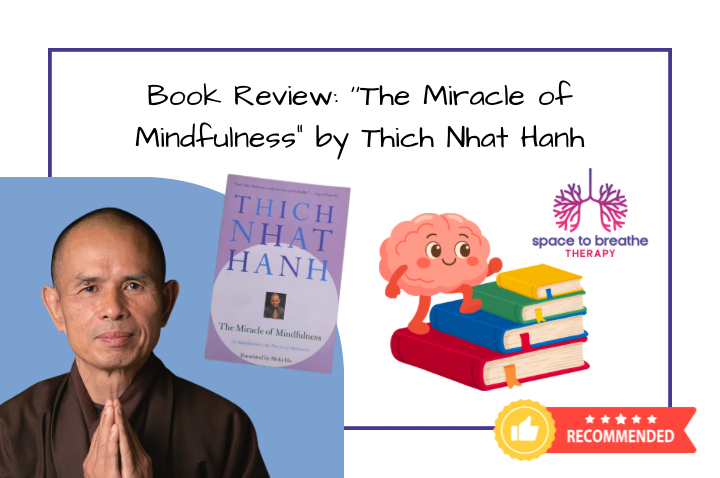
The Miracle of Mindfulness is a calm, grounding book that doesn’t try to motivate the reader or push them toward self improvement. Instead, it offers something quieter. It invites you to pause and notice the present moment. In a world that often focuses on productivity and constant progress, the book reads almost like a reminder that simply being here, right now, is already enough.
Reading The Miracle of Mindfulness by Thich Nhat Hanh gradually draws you into a different way of experiencing everyday life. As a psychotherapist who is autistic and ADHD, and someone who has lived with anxiety for much of my life, the idea of slowing down and being present has always felt both appealing and difficult. What this book offers is a gentle reminder that mindfulness does not need to be complicated or perfect in order to matter.
Early in the book, Thich Nhat Hanh introduces mindfulness through very simple moments in daily life such as washing dishes, drinking tea, walking, or breathing. The message is that mindfulness is not something reserved for meditation retreats or long periods of silence. It can exist within ordinary activities by bringing gentle awareness to what we are doing in the present moment. Rather than rushing through tasks while thinking about what comes next, the book encourages experiencing each moment more fully.
Reading this through the lens of my own neurodivergent experience was particularly interesting. ADHD can pull attention in many directions at once, while anxiety often pulls the mind into the future. The approach to mindfulness described here offers a way of returning to the present without judgement. It does not demand that thoughts disappear. Instead, it encourages noticing them with curiosity and then gently bringing attention back to the breath or whatever task is in front of you.
What stood out most is the compassion that runs through the book. Thich Nhat Hanh writes with a calm, patient tone that feels deeply human. There is no pressure to master mindfulness quickly or perfectly. Instead, he suggests that awareness itself can be transformative. Simply noticing how we breathe, walk, or move through the day can slowly change the way we relate to our thoughts and emotions.
In therapeutic work, this shift can be incredibly powerful. When people begin to observe their thoughts rather than becoming completely caught up in them, even difficult feelings can start to feel more manageable. Mindfulness creates a small space between what we experience and how we respond to it. Within that space there is often more choice, more compassion, and a greater sense of understanding.
The Miracle of Mindfulness ultimately reads as a quiet reminder that peace is not always found by changing our circumstances. Sometimes it begins by changing the
way we meet the moments we are already living. Even within busy or complicated lives, small moments of awareness, a breath, a step, a pause, can become steady anchors that gently bring us back to ourselves.
With Love, Maggie.