






























.jpg)
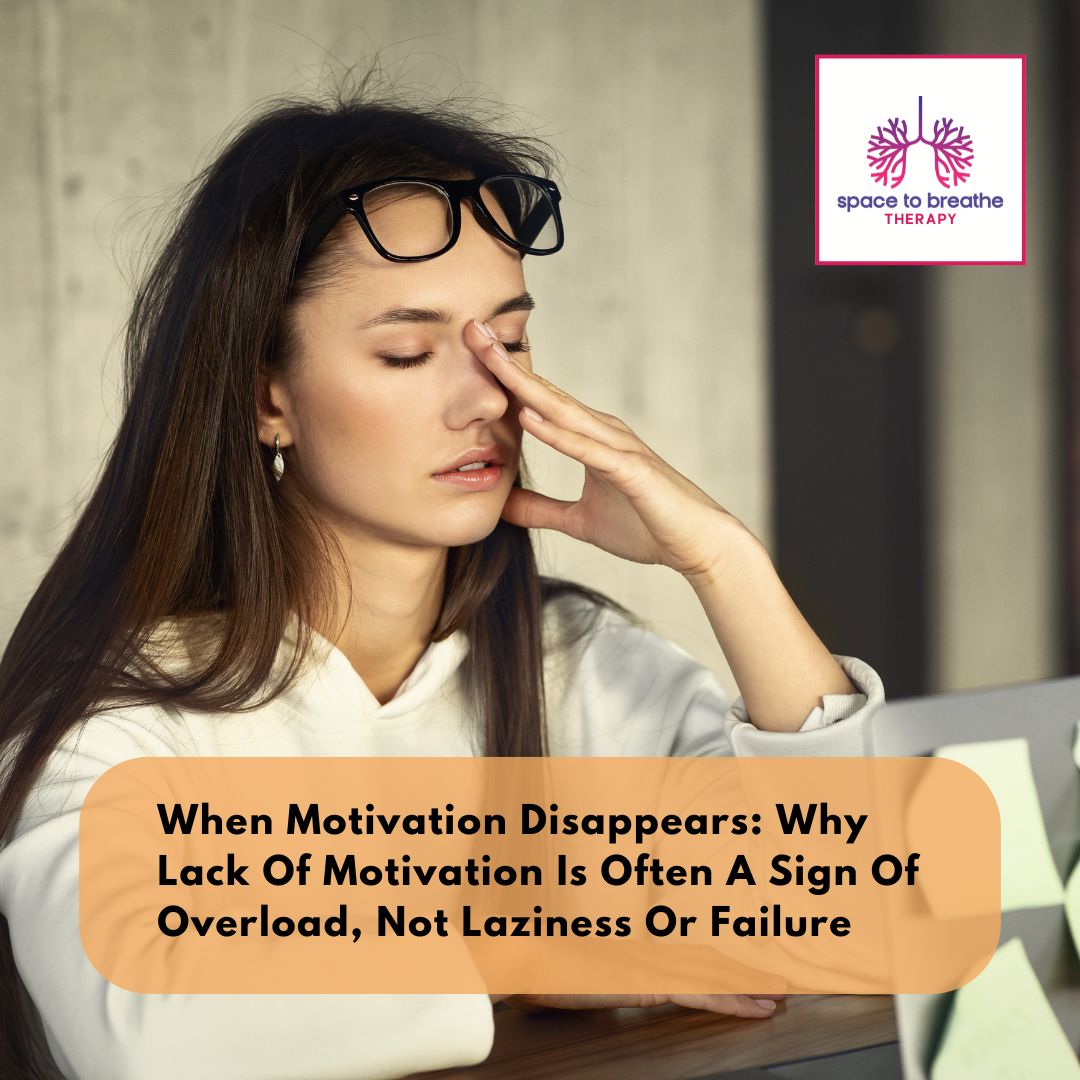
There are times when motivation seems to vanish without warning. Tasks that once felt manageable suddenly feel heavy, distant, or impossible to begin. It’s easy in these moments to default to self-criticism, to label the experience as laziness, lack of discipline, or personal failure. But more often than not, disappearing motivation is not a character flaw. It’s a nervous system under strain.
Motivation relies on available capacity. When the brain is overloaded I.e juggling stress, uncertainty, emotional labour, decision fatigue, or unmet basic needs, it shifts into conservation mode. Energy is redirected toward coping and survival rather than growth and productivity. From the outside, this can look like avoidance or apathy. Internally, it often feels like exhaustion, fog, or quiet overwhelm.
Chronic stress compounds this effect. When demands consistently outweigh resources, the body produces stress hormones designed for short-term survival. Over time, this depletes focus, reduces dopamine sensitivity, and makes initiating tasks significantly harder. What once required moderate effort may now feel like climbing uphill with no visible reward.
Neurodivergent individuals may experience this even more intensely. When environments, expectations, or structures don’t align with cognitive style, friction builds. Motivation struggles not because of unwillingness, but because the system isn’t designed for sustainable engagement. Without adequate rest, clarity, or flexibility, shutdown becomes protective.
Importantly, rest and reduced output are not signs of regression. They are signals. Lack of motivation can indicate unmet needs: sleep, nourishment, reassurance, boundaries, novelty, or support. It may point to burnout rather than boredom, or anxiety rather than indifference.
Rebuilding motivation begins with reducing load, not increasing pressure. Breaking tasks into smaller steps, externalising reminders, lowering expectations temporarily, and allowing genuine recovery can restore momentum gradually. Compassion is not indulgence, it’s strategy.
When motivation disappears, the question shifts from “What’s wrong with me?” to “What is overwhelming me?” In that shift, shame softens and understanding grows. Often, the path forward isn’t pushing harder, it’s listening more closely to what the mind and body are asking for.
With Love, Maggie.