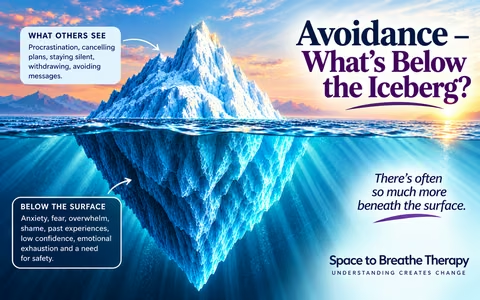
Avoidance can look like procrastination, cancelling plans,
withdrawing, staying silent or putting things off.
But beneath the surface there may be fear, anxiety,
overwhelm, shame, exhaustion or a need for safety.
Explore the iceberg to understand what avoidance
may be protecting someone from, and how small,
manageable steps can support change.
WHAT OTHERS SEE
BELOW THE SURFACE · HIDDEN EXPERIENCES
Understanding avoidance
There is more beneath the surface
Avoidance is a way of moving away from something
that feels uncomfortable, threatening or overwhelming.
It can provide short-term relief, but repeated avoidance
may sometimes make fears stronger or everyday life
more restricted.
What this may feel like
Someone may want to take action but feel unable to
begin. They may experience physical anxiety,
racing thoughts or an intense urge to escape.
What others may misunderstand
Avoidance is not always laziness or a lack of interest.
It can reflect genuine distress, although it is
important to distinguish anxiety-based avoidance
from rest, reasonable boundaries and safety.
What might help
Understanding what is being avoided, reducing
unnecessary pressure and identifying manageable
steps can help. Some situations may benefit
from professional support.
A moment to reflect: What might your avoidance
be trying to protect you from?
A gentle reminder
Not every avoided situation needs to be faced.
Choosing safety, rest or a healthy boundary can
be appropriate. The aim is to understand when
avoidance is limiting your choices, rather than
pushing yourself into unsafe situations.
Personal reflection
My Own Avoidance Iceberg
Explore the situations you avoid, what may sit
beneath them, and what support or manageable
changes might help.
Saved reflections remain in this browser unless
browser data is cleared. Avoid storing sensitive
information on shared devices.