





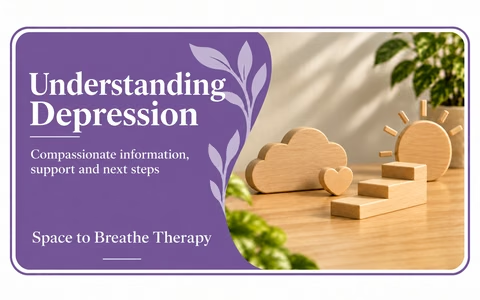
UNDERSTANDING DEPRESSION
Depression can make the world feel smaller, heavier and harder to move through. It is more than sadness or a difficult week. It can affect the way you think, sleep, eat, concentrate, connect with other people and manage ordinary daily tasks. It can also leave you feeling numb, irritable, guilty or disconnected rather than visibly sad.
I created this compassionate one-page guide to explain depression without blame or shame. It brings together common signs, the ways depression can affect everyday life, factors that may contribute, small actions that may offer support, and the treatment options that can be discussed with a GP or therapist. The central message is simple: depression is not a weakness, and you do not have to manage it alone.
There is no single cause and no single way to experience depression. Loss, trauma, chronic stress, loneliness, discrimination, financial pressure, physical illness, pain, hormones, medication, family history and individual vulnerability may all play a part. Sometimes there is no obvious explanation. Whatever the circumstances, the person experiencing depression deserves curiosity and care rather than judgement.
The guide also includes gentle ideas for the present moment. Telling one safe person, choosing one manageable task, eating or drinking something, getting a little daylight, trying gentle movement or creating a simple routine can provide small points of steadiness. These steps are not a replacement for treatment, and difficulty doing them is not a failure. On very hard days, surviving the day may be enough.
Professional support can include guided self-help, psychological therapy, medication or a combination of approaches, depending on the severity of symptoms, personal preference and individual circumstances. In England, adults can self-refer to NHS Talking Therapies, and a GP can help review symptoms and discuss suitable options. It is worth seeking help when symptoms are present most of the day, every day, for more than two weeks, when they are worsening, or when daily life is becoming difficult to manage.
The safety information is intentionally clear. If someone feels they may harm themselves or cannot keep themselves safe, call 999 or go to A&E. For urgent mental health help, contact NHS 111. Samaritans can be reached free on 116 123, 24 hours a day.
Please use this resource as a starting point for a kind, honest conversation. Recovery is rarely a straight line, and the right support can take time to find. Small steps still count. You are not lazy, you are not a burden, and you deserve care.
With warmth,
Maggie
Space to Breathe Therapy
This educational resource does not replace personalised medical or psychological care.