





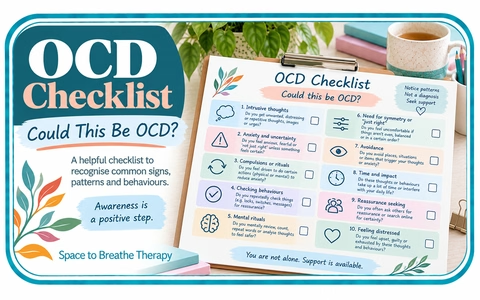
OCD CHECKLIST
Could This Be OCD?
OCD is often misunderstood as simply liking things clean, organised or in a particular order.
In reality, obsessive-compulsive disorder can involve unwanted intrusive thoughts, images, urges, sensations or doubts alongside behaviours or mental rituals that you feel driven to perform to reduce distress, prevent something feared or gain certainty.
The OCD Checklist — Could This Be OCD? is a supportive recognition tool rather than a diagnostic test.
Inside the full guide you will find:
• common examples of intrusive thoughts, images, urges and doubts
• anxiety, uncertainty and responsibility patterns
• checking and repeating behaviours
• contamination, cleaning and avoidance
• mental rituals that other people may not see
• reassurance seeking
• symmetry and “just right” experiences
• confessing, reviewing and certainty seeking
• questions about time, distress and impact on daily life
• a personal reflection table
• information about what an OCD assessment may explore
• guidance for preparing to ask for support
• information about CBT and Exposure and Response Prevention (ERP)
• a personal message from me
There is no score that diagnoses OCD in this checklist.
You also do not need to recognise every example.
The important questions are whether intrusive experiences are repetitive and distressing, whether you feel driven to carry out compulsions or mental rituals, how much time the cycle takes, and whether it is interfering with everyday life.
OCD can attach itself to many different themes, and some compulsions happen entirely inside the mind. This can make it difficult to recognise and difficult to explain.
If you identify with some of the patterns in this resource, you do not need to diagnose yourself before asking for help. You can tell a professional that you are experiencing intrusive thoughts and repetitive behaviours or mental rituals and would like to explore whether OCD could be part of what is happening.
And try not to use the checklist repeatedly to obtain certainty. Its purpose is awareness — not reassurance.
Space to Breathe Therapy




