





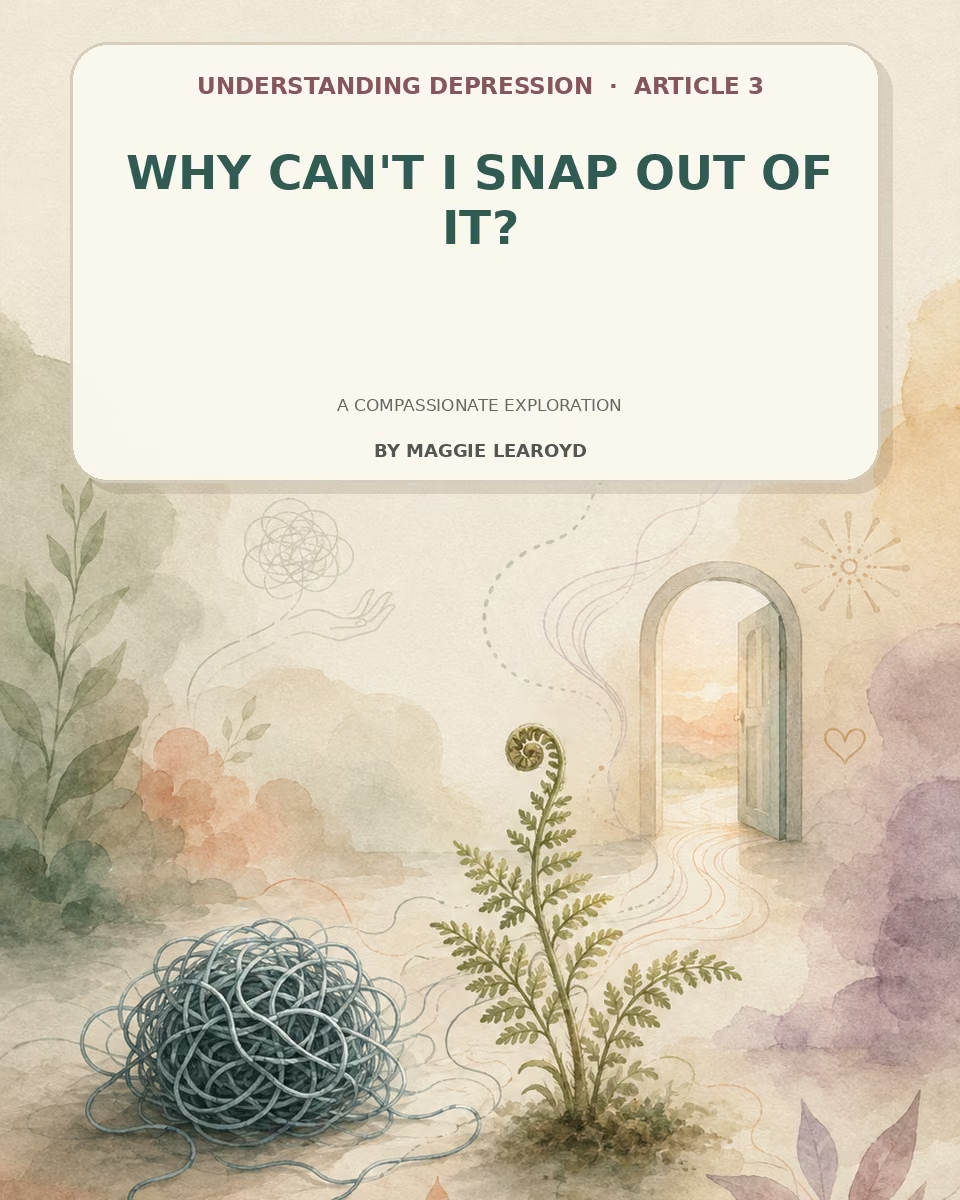
Why Can't I Snap Out of It?
Understanding Depression - Article 3
There are times when depression changes ordinary life so gradually that we begin blaming ourselves before we recognise what is happening. Why Can't I Snap Out of It? is a question many people carry quietly, often alongside guilt, confusion or the fear that they should simply be coping better.
In this article, I offer a compassionate explanation of what may be happening beneath the surface. "If I just tried harder, surely I'd feel better." It's a thought many people living with depression have said to themselves. You may have heard it from others too: "Pull yourself together," "Think positively," "Just keep busy," or "You've got so much to be grateful for." Although these comments are often well-intentioned, they can leave people feeling misunderstood, guilty or ashamed. If recovering from depression were simply a matter of willpower, most people would choose to feel better immediately. The reality is that depression is far more complex. It affects the way your brain, body and emotions work together, making it impossible to
The resource explores depression changes more than your mood, why positive thinking isn't enough, why willpower isn't the problem, common misconceptions. It looks beyond labels and considers how depression can affect the nervous system, thinking, energy, emotion, relationships and everyday functioning. Where the article focuses on work, it also considers the pressure to appear capable while privately using enormous energy just to get through the day.
I have written this for people who recognise themselves in the question, and for relatives, colleagues, managers and professionals who want to respond with greater understanding. The aim is not to make assumptions or offer a quick answer. It is to create space for the experience to make sense.
Throughout the article, I encourage curiosity rather than criticism. Difficulty concentrating is not carelessness. Exhaustion is not laziness. Emotional numbness is not a lack of love. Crying easily is not weakness. Needing support at work does not mean someone has stopped being capable or valuable.
My hope is that this resource helps the reader feel less alone and gives them language for something that may have been difficult to explain. Understanding does not remove every challenge, but it can reduce shame and make the next supportive step feel more possible.
Please remember that this article provides general information rather than a diagnosis. If depression is affecting daily life, physical health or safety, speaking with a GP or appropriately qualified mental-health professional can be an important form of care.
By Maggie Learoyd
Psychotherapist | ADHD, Autism & ARFID Specialist
Founder of Space to Breathe Therapy