Downloads - This section offers supportive downloadable resources that may help people process grief in their own time and in their own way. These may include reflective writing exercises, gentle prompts, practical coping tools, and guided activities designed to support emotional expression and self-care.
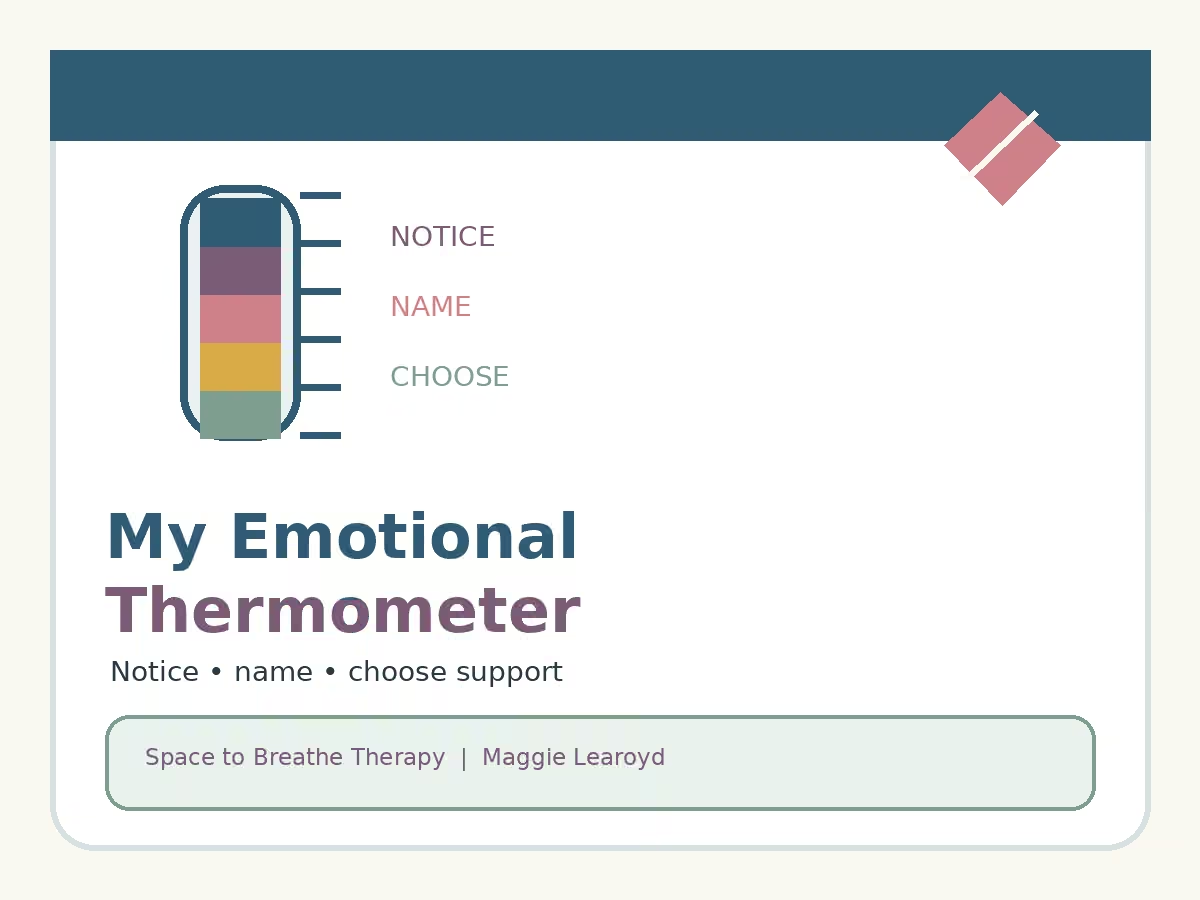
MY EMOTIONAL THERMOMETER
Things Left Unsaid
My Grief & Wellbeing Plan
Asking for Support While Grieving
Keeping a Continuing Bond
Loneliness & Grief
Who Am I After Loss?
Difficult Dates & Triggers
Memories I Carry
What is Grief - Grief is the emotional, psychological, and physical response to loss. While it is most commonly associated with bereavement, grief can occur after many kinds of losses, including relationships, life changes, health challenges, or major transitions. Understanding what grief is can help people recognise and make sense of their own feelings.

Traumatic Grief - After a Sudden or Traumatic Death

Prolonged Grief - When Grief Remains Intensely Disabling

Living and Ambiguous Grief - When There Is No Clear Ending
Grief After Non-Death Losses - Relationships, Health, Work and Identity

Disenfranchised Grief - When Your Loss Is Not Recognised

Delayed Grief - When Feelings Come Later

Cumulative Grief - When Losses Build Up

Bereavement Grief - After Someone Dies

Anticipatory Grief - Grieving Before a Loss
Many Forms of Grief - Grief does not always look the same. People may experience different forms of grief depending on the nature of the loss. These can include anticipatory grief, complicated grief, collective grief, or grief connected to life changes. Exploring these different forms can help people better understand their own experiences.

EMPTY ARMS
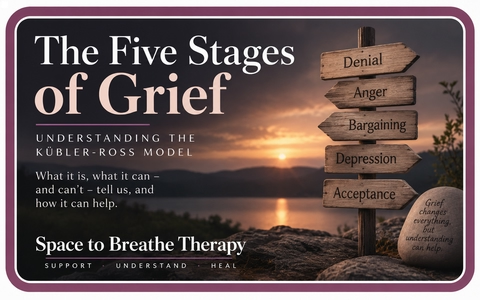
THE FIVE STAGES OF GRIEF

EVERYONE GRIEVES DIFFERENTLY

Ambiguous Grief

Grief After Losing a Job, Career or Sense of Purpose

Grief After the Loss of a Pet

Grief After Pregnancy Loss

Grief After the Loss of a Child

Grief After the Loss of a Parent
Emotional & Physical Effects of Grief - Grief can affect both the mind and the body. People may experience sadness, anger, confusion, or emotional numbness, while physically they may feel fatigue, sleep changes, difficulty concentrating, or tension in the body. These responses are common and reflect the deep impact that loss can have on overall wellbeing.
Emotional and physical effects of grief
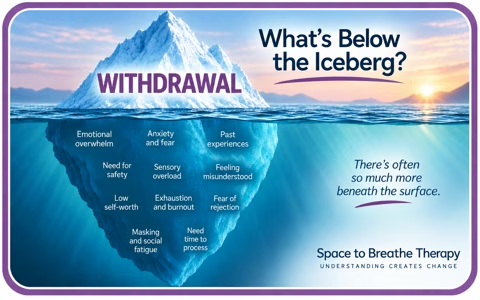
WITHDRAWAL - WHAT'S BELOW THE ICEBERG?
Emotional and physical effects of grief
I DON’T KNOW WHO I AM WITHOUT YOU
Emotional and physical effects of grief

EVERYONE THINKS I SHOULD BE COPING
Emotional and physical effects of grief

I’M ANGRY WITH YOU FOR LEAVING
Emotional and physical effects of grief

MY BODY IS GRIEVING TOO
Emotional and physical effects of grief

Today the Grief Is Too Much
Emotional and physical effects of grief

There Are Things I Never Got to Say
Emotional and physical effects of grief
I Miss You and It Hurts
Emotional and physical effects of grief

I Want to Scream - This Isn't Fair
Grief & the Nervous System - Loss can activate the body’s stress and survival systems. The nervous system may respond with feelings of anxiety, exhaustion, numbness, or emotional overwhelm. Understanding how grief affects the nervous system can help people recognise why their body and emotions may feel different during periods of loss.
Grief and the nervous system

DENIAL — WHEN REALITY FEELS TOO MUCH TO TAKE IN
Grief and the nervous system
When Grief Has No Off Switch
Grief and the nervous system
Grief When Children Leave Home or Family Roles Change
Grief and the nervous system
Grief and Loss After an Accident
Grief and the nervous system

Grief and Loss After a Stroke
Grief and the nervous system

Grief and Loss After a Heart Attack
Grief and the nervous system

Grief After Retirement or Leaving a Career
Grief and the nervous system

Grief After Moving Home or Losing Your Home
Grief and the nervous system

Grief After Losing Mobility or Independence
Why Grief Comes in Waves - Grief is rarely a steady experience. Many people notice that emotions come in waves, sometimes appearing unexpectedly or triggered by memories, anniversaries, or reminders of the person or situation that has been lost. These waves are a normal part of the grieving process.
When a Wave of Grief Hits
Grief Triggers, Anniversaries and Sudden Waves
Understanding Why Grief Comes in Waves
Why Grief Feels Overwhelming - The intensity of grief can sometimes feel difficult to manage. Loss can affect identity, relationships, routines, and a sense of stability. This page explores why grief can feel so powerful and offers reassurance that these feelings are part of the mind and body adjusting to change.
Why grief feels overwhelming

When Your Brain Feels Full
Why grief feels overwhelming
Grief After the Death of Someone You Love
Coaching - This page explores coaching support for those navigating grief and loss. It looks at how personalised guidance can help process emotions, build coping strategies, and find a way forward at a pace that feels right.

GRIEF & BEREAVEMENT SUPPORT GROUPS - UK WIDE
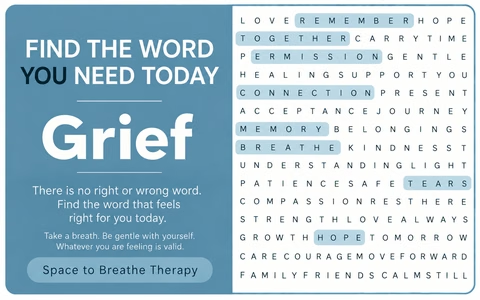
Find the Word You Need Today - Grief
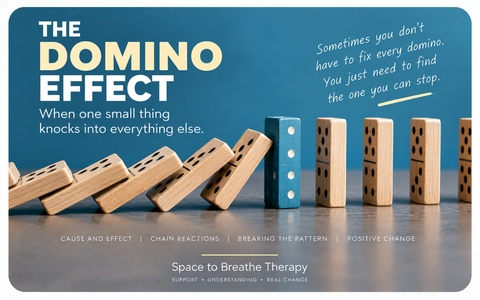
THE DOMINO EFFECT

LET'S TRASH CAN IT

THE THOUGHT WALL

THE UNSAID WALL

MENTAL HEALTH SUPPORT GROUPS — UK DIRECTORY

The Letter I Never Sent. The Letter I Never Sent.
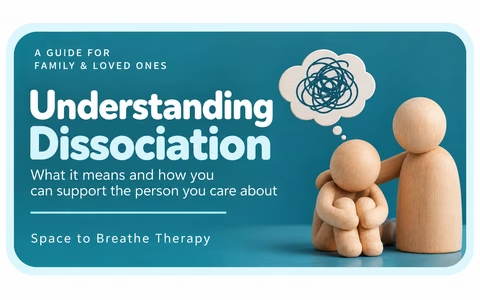
UNDERSTANDING DISSOCIATION - A GUIDE FOR FAMILY & LOVED ONES