What is Substance Misuse - Substance misuse refers to using alcohol, drugs, or other substances in ways that may negatively affect a person’s health, relationships, or daily life. It can involve using substances more often than intended, relying on them to cope with emotions, or finding it difficult to reduce or stop using them.
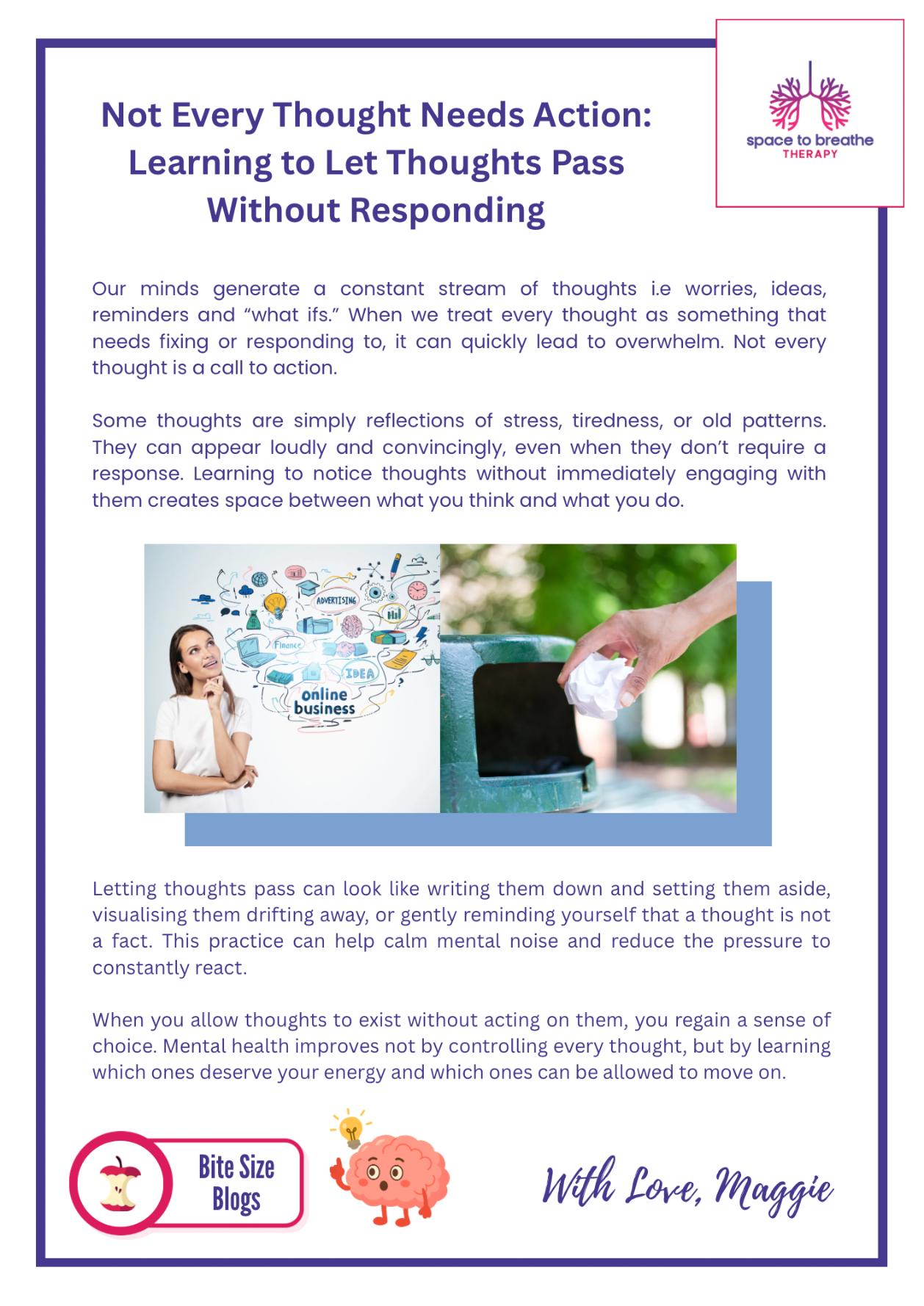
Not Every Thought Needs Action: Learning to Let Thoughts Pass Without Responding
Letting thoughts pass creates distance, reduces reactivity, and restores choice over where energy goes next.

Breaking Tasks Down with Sticky Notes: A Small Habit That Makes a Big Difference
Breaking tasks into visible steps boosts motivation, reduces overwhelm, and makes progress feel achievable today.

Small Routines Create Big Safety: How Simple Repetition Supports Mental Health
Simple routines provide predictability, reduce stress, and create safety for the nervous system daily gently.
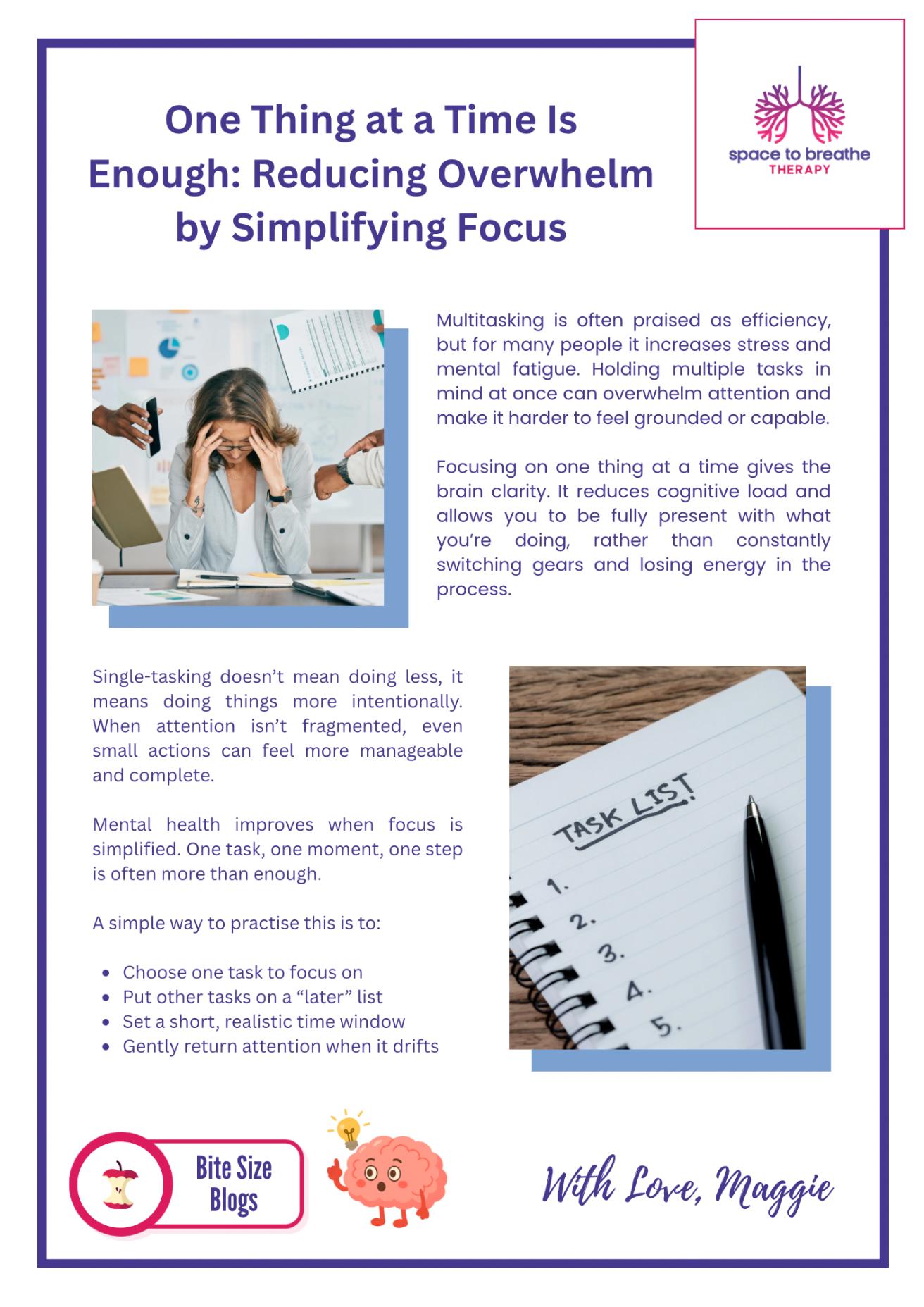
One Thing at a Time Is Enough: Reducing Overwhelm by Simplifying Focus
Single-tasking reduces cognitive load, increases clarity, and helps overwhelm feel manageable through focused attention today.

Rest Is Productive: Reframing What Recovery Means
Rest supports recovery, emotional regulation, and focus, making wellbeing sustainable rather than something to earn.

Progress Doesn’t Have to Be Fast: Why Slow and Steady Still Counts
Slow progress still counts, supporting sustainability, healing, and change without burnout, urgency, or self-judgement pressure.

You Are Not Behind: Letting Go of Timelines That Don’t Belong to You
Releasing borrowed timelines reduces shame, honours circumstances, and allows growth to unfold at your pace.

You Don’t Have to Feel Motivated to Begin: Why Starting Small Matters More Than Feeling Ready
You don’t need motivation to start; small actions reduce resistance and build momentum over time.
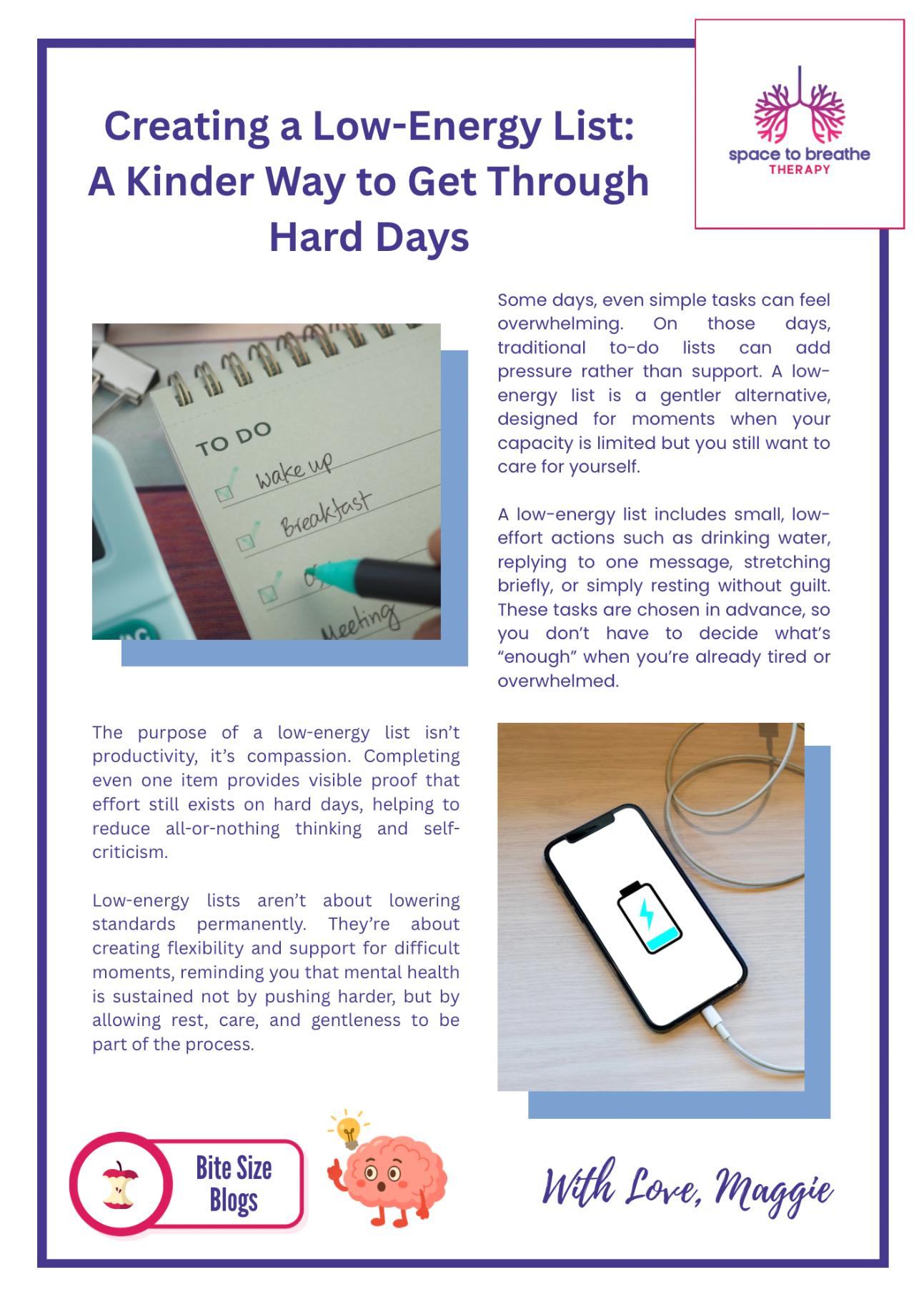
Creating a Low-Energy List: A Kinder Way to Get Through Hard Days
Low-energy lists offer structure, helping you care for yourself when capacity or energy are limited.
The Difference Between Misuse & Addiction - Substance misuse and addiction are often used interchangeably, but they can describe different stages or patterns of substance use. Misuse may involve unhealthy or risky patterns of use, while addiction typically refers to a stronger dependence where a person feels unable to stop despite negative consequences.

Your Gut, Your Mind: How Digestive Health Impacts Anxiety, Mood, and Energy
Explores gut-brain axis research, inflammation, food sensitivities, IBS, and mental health links.

Regulation, Not Relaxation: Why Calming Your Nervous System Matters More Than Self-Care Trends
Focuses on nervous system regulation, polyvagal theory, sensory safety, and why “rest” doesn’t always mean recovery.

Burnout in Everyday Life: Why Modern Living Is Exhausting Our Nervous Systems
Explores chronic stress, decision fatigue, digital overload, caregiving fatigue, and why burnout now affects people outside traditional work environments.
Why People Turn to Substances - People may turn to substances for many reasons, including stress, emotional pain, trauma, loneliness, social pressures, or mental health difficulties. Understanding these underlying reasons can help create more compassionate and effective ways of supporting individuals who may be struggling.
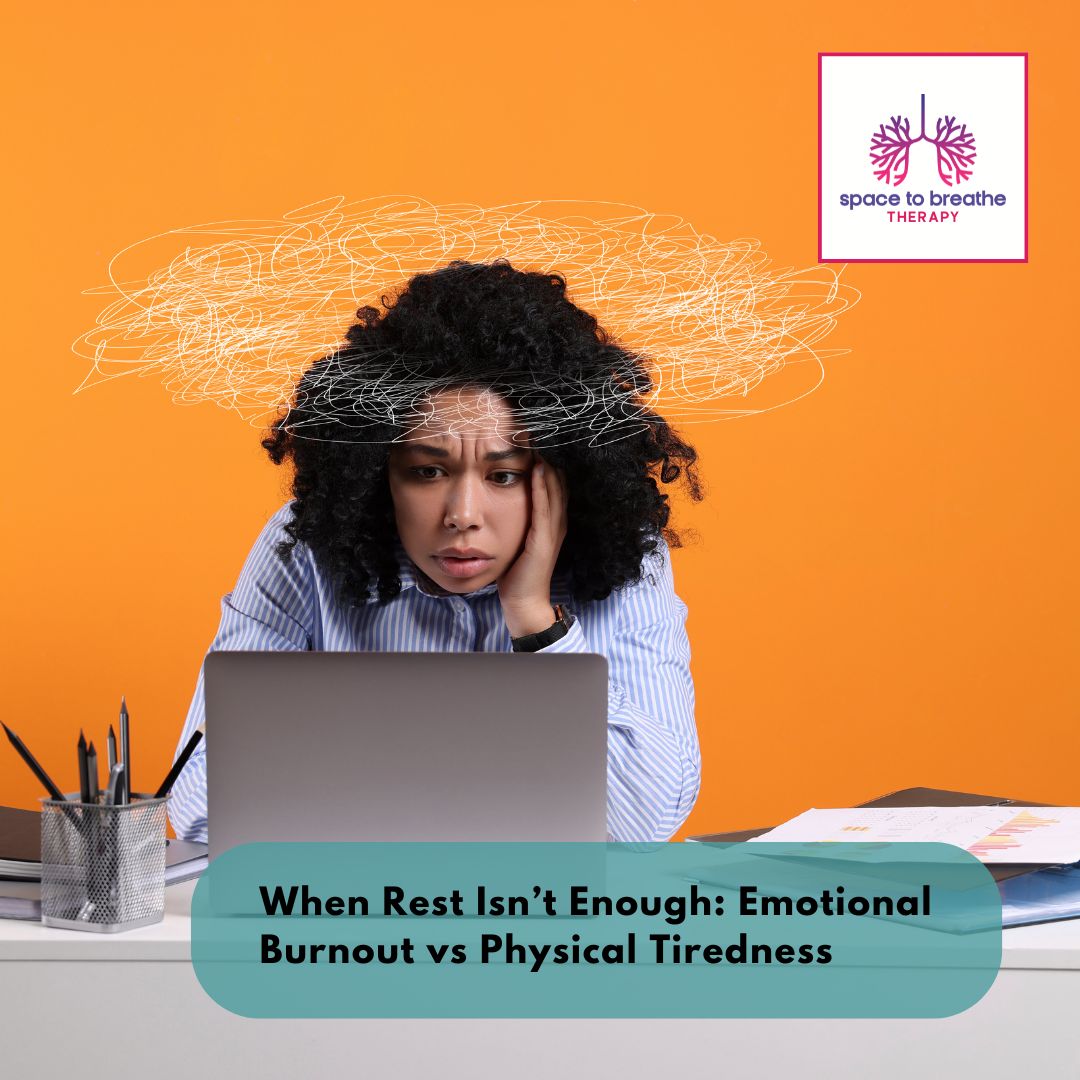
When Rest Isn’t Enough: Emotional Burnout vs Physical Tiredness
Emotional burnout drains motivation, meaning, and connection, unlike physical tiredness restored by rest.
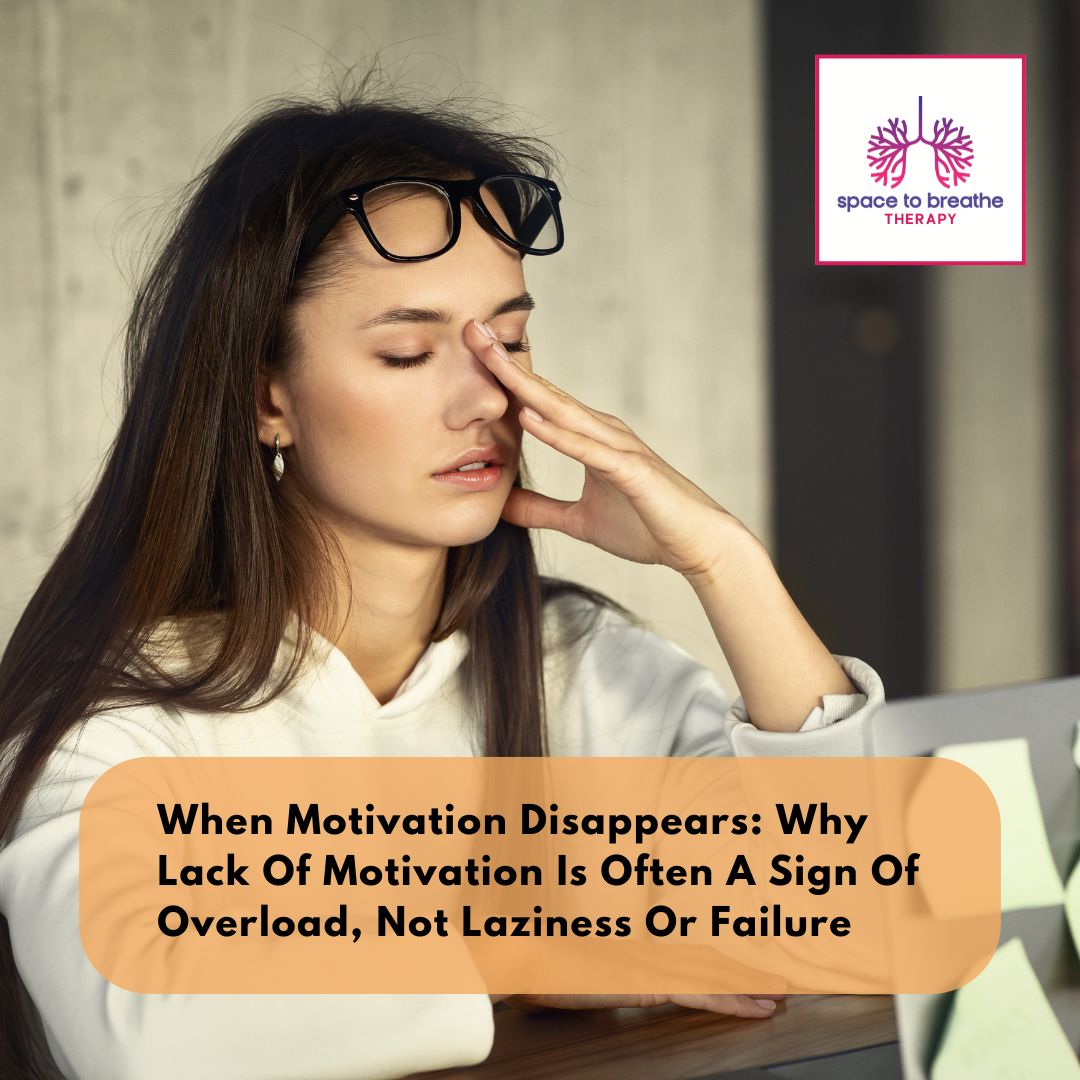
When Motivation Disappears: Why Lack Of Motivation Is Often A Sign Of Overload, Not Laziness Or Failure
Motivation can fade under stress, overload, burnout, or unmet physical and emotional needs.
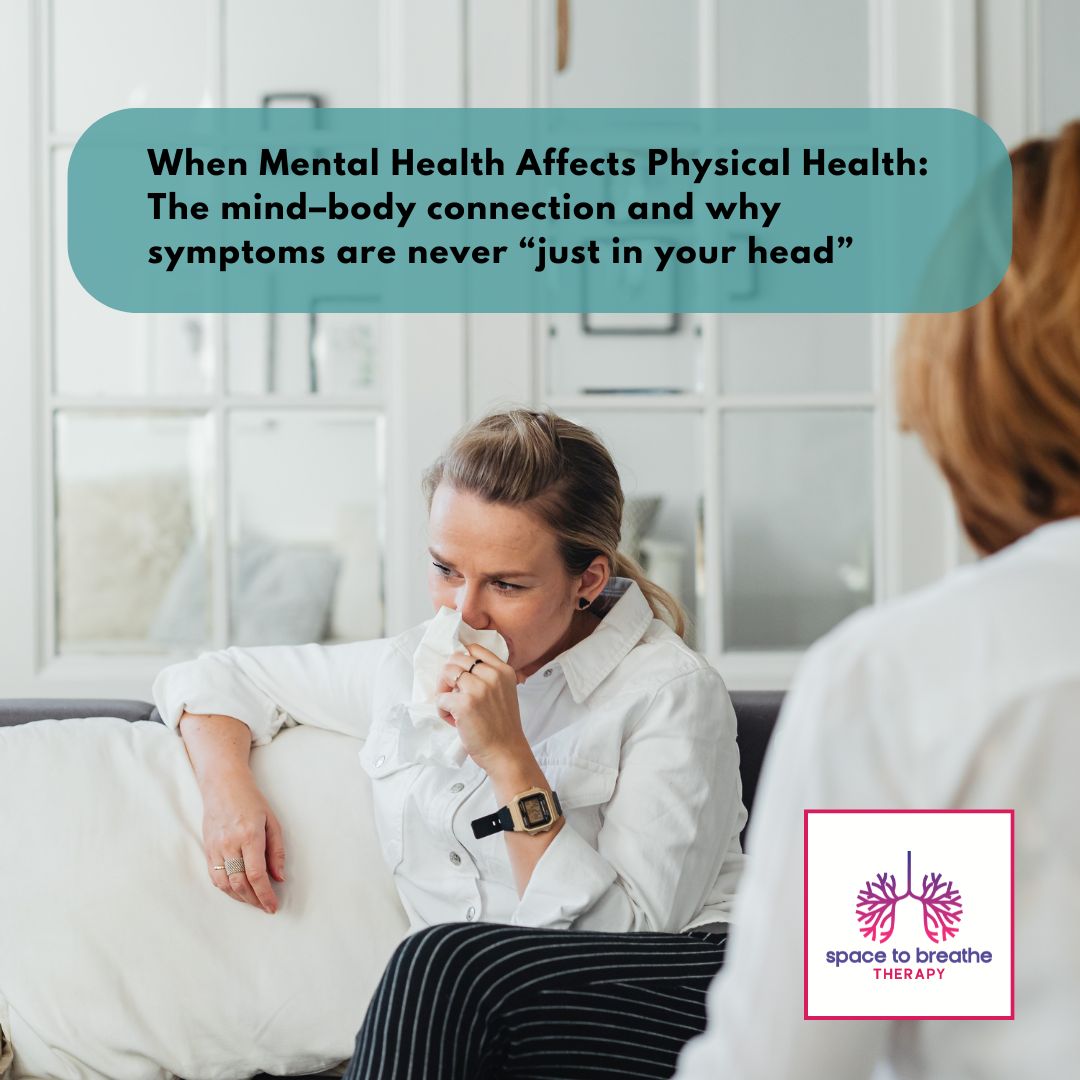
When Mental Health Affects Physical Health: The mind–body connection and why symptoms are never “just in your head”
Mental and physical health are interconnected through stress, hormones, nervous system, and biology.

Trauma Isn’t Always One Big Event: Exploring Complex Trauma and The Impact of Repeated Stress Over Time
Complex trauma develops from repeated stress, shaping trust, safety, relationships, and nervous system responses.

The Quiet Trade-Offs of Neurodivergence: Energy, Motivation, and Burnout
Neurodivergent energy varies with ADHD, autism, sensory load, motivation, and burnout risk.

The Quiet Toll: Emotional Burnout in Caring Roles
Caregiving can bring emotional burnout, compassion fatigue, and exhaustion despite deep commitment.

The Power of Talking: Why Speaking About Mental Health Reduces Isolation And Shame
Talking about mental health reduces isolation, builds connection, and encourages support.

The Nervous System Explained Simply: Fight, Flight, Freeze, and Fawn and How These Show Up at Work
Fight, flight, freeze, and fawn are instinctive nervous system responses to stress.
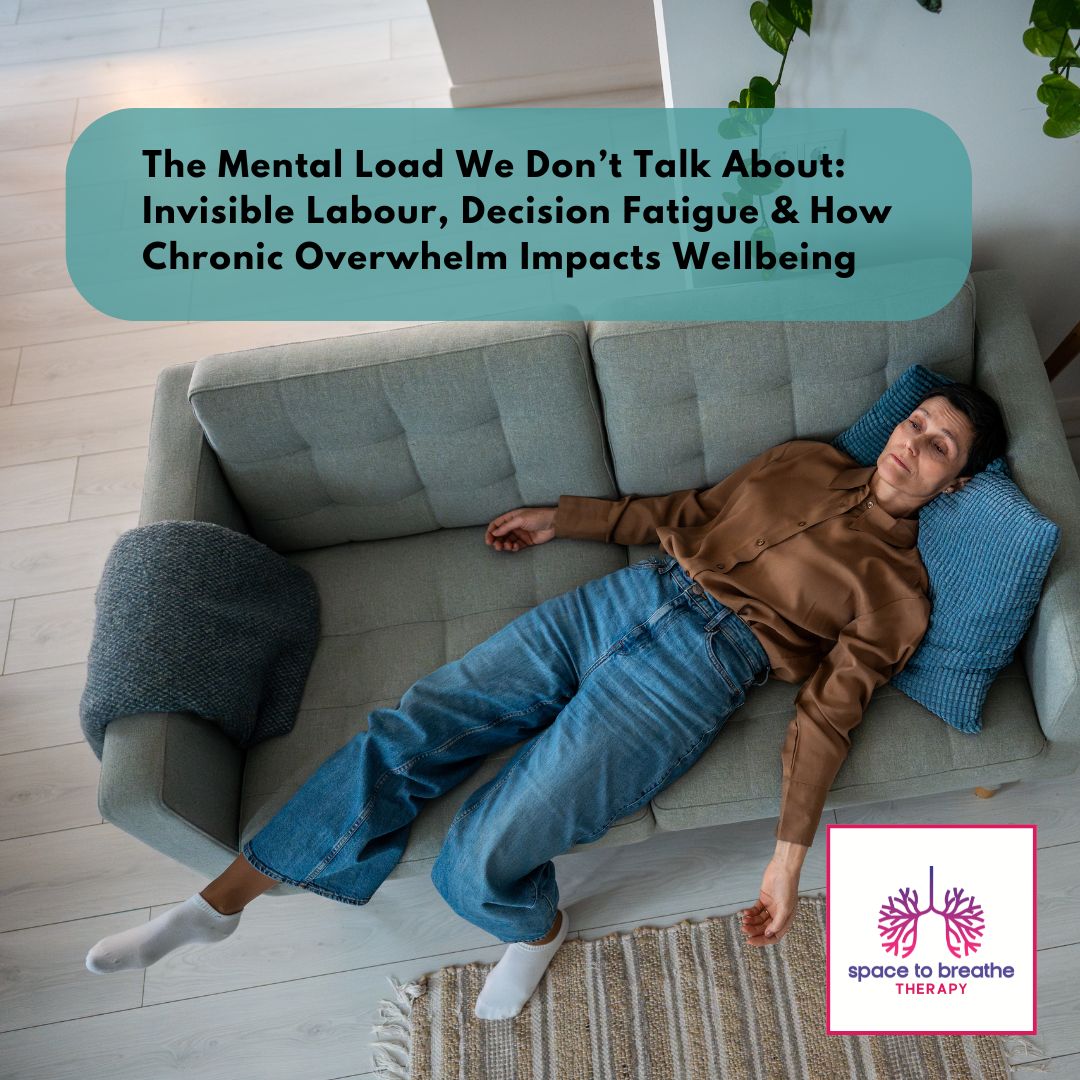
The Mental Load We Don’t Talk About: Invisible Labour, Decision Fatigue And How Chronic Overwhelm Impacts Wellbeing
Mental load is invisible planning, remembering, and decision-making that quietly drains energy.

The Gut-Brain Axis: Diet, Mood, Evidence and Myths
Gut health influences mood through microbiome, inflammation, diet diversity, and the gut-brain axis.

Rest Is Not Earned: Challenging Productivity Culture And Reframing Rest As a Human Need
Rest restores focus, creativity, resilience, and energy in a culture obsessed with productivity.

Progress Doesn’t Have to Be Visible
Progress often appears quietly through boundaries, resilience, kinder self-talk, and small internal shifts.
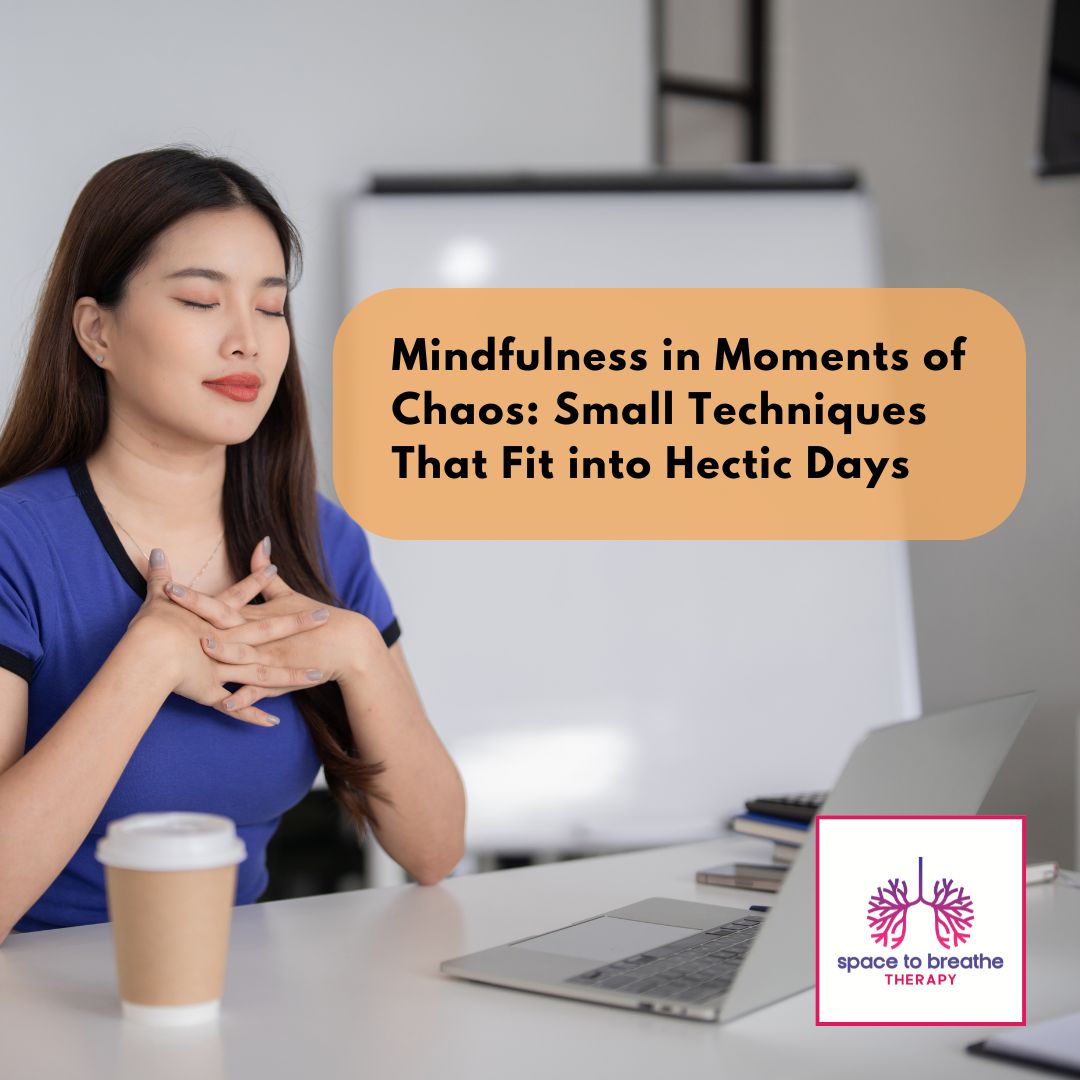
Mindfulness in Moments of Chaos: Small Techniques That Fit into Hectic Days
Small mindfulness practices like breathing, grounding, and pauses can steady attention during chaos.
Integrating mental health into healthcare enables early intervention, reducing stigma, illness progression, and suffering.
Integrating mental health into healthcare enables early intervention, reducing stigma, illness progression, and suffering.

Managing Digital Overwhelm: Social Media Fatigue and Healthy Boundaries Online
Digital overwhelm reflects constant online demands, requiring boundaries to protect attention, mood, and relationships.

Hormones and the Mind: A Short Guide
Hormonal shifts from PMDD, thyroid imbalance, and perimenopause can strongly influence mood and anxiety.

High-Functioning Anxiety
High-functioning anxiety hides behind achievement, perfectionism, over-preparing, restless thoughts, and constant pressure.
Eating Disorders and Mental Health: Awareness, Coping, and Compassion
Eating disorders involve control, emotional coping, food rituals, fear, isolation, and physical strain.

Depression Doesn’t Always Look Like Sadness
Depression can appear as numbness, irritability, exhaustion, fading joy, and persistent inner heaviness.

Anxiety & The Body: How Anxiety Shows Up Physically
Anxiety affects the body through chest tightness, digestive disruption, muscle tension, fatigue, and headaches.

Feeling Safe in the World: Identity, Belonging, and Psychological Security
Focus on identity stress, social safety, marginalisation stress, and psychological safety.

The Hidden Mental Load of Money Worry
Explores cost-of-living anxiety, financial trauma, shame, survival stress, and nervous system safety.

Why We’re More Tired Than Ever: Sleep, Stress, and the Modern Nervous System
Covers circadian rhythm disruption, stress hormones, screens, anxiety, and exhaustion culture.

When Your Body Affects Your Mind: Mental Health in Chronic Health Conditions
Focus on invisible illness, fatigue syndromes, autoimmune conditions, pain disorders, and emotional impact.

Always Online: How Constant Connectivity Is Reshaping Our Mental Health
Covers dopamine loops, social media burnout, attention fragmentation, comparison culture, and digital fatigue.

Trauma Isn’t Always a Memory, Sometimes It’s a Nervous System Pattern
Explores developmental trauma, chronic stress, attachment, and how trauma shows up somatically.

Beyond Labels: Supporting Neurodivergent Minds in a Neurotypical World
Focuses on ADHD, autism, sensory processing, masking, workplace pressures, and burnout.
Your Gut, Your Mind: How Digestive Health Impacts Anxiety, Mood, and Energy
Explores gut-brain axis research, inflammation, food sensitivities, IBS, and mental health links.
Regulation, Not Relaxation: Why Calming Your Nervous System Matters More Than Self-Care Trends
Focuses on nervous system regulation, polyvagal theory, sensory safety, and why “rest” doesn’t always mean recovery.
Burnout in Everyday Life: Why Modern Living Is Exhausting Our Nervous Systems
Explores chronic stress, decision fatigue, digital overload, caregiving fatigue, and why burnout now affects people outside traditional work environments.
Self Medication & Emotional Pain - Some people use substances as a way of coping with difficult emotions such as anxiety, depression, grief, or trauma. This is sometimes known as self-medication. While substances may temporarily reduce emotional discomfort, they can also make underlying problems more difficult to manage over time.

Not Every Thought Needs Action: Learning to Let Thoughts Pass Without Responding
Letting thoughts pass creates distance, reduces reactivity, and restores choice over where energy goes next.
Breaking Tasks Down with Sticky Notes: A Small Habit That Makes a Big Difference
Breaking tasks into visible steps boosts motivation, reduces overwhelm, and makes progress feel achievable today.
Small Routines Create Big Safety: How Simple Repetition Supports Mental Health
Simple routines provide predictability, reduce stress, and create safety for the nervous system daily gently.
One Thing at a Time Is Enough: Reducing Overwhelm by Simplifying Focus
Single-tasking reduces cognitive load, increases clarity, and helps overwhelm feel manageable through focused attention today.
Rest Is Productive: Reframing What Recovery Means
Rest supports recovery, emotional regulation, and focus, making wellbeing sustainable rather than something to earn.
Progress Doesn’t Have to Be Fast: Why Slow and Steady Still Counts
Slow progress still counts, supporting sustainability, healing, and change without burnout, urgency, or self-judgement pressure.
You Are Not Behind: Letting Go of Timelines That Don’t Belong to You
Releasing borrowed timelines reduces shame, honours circumstances, and allows growth to unfold at your pace.
You Don’t Have to Feel Motivated to Begin: Why Starting Small Matters More Than Feeling Ready
You don’t need motivation to start; small actions reduce resistance and build momentum over time.
Creating a Low-Energy List: A Kinder Way to Get Through Hard Days
Low-energy lists offer structure, helping you care for yourself when capacity or energy are limited.
You Don’t Have to Be Positive to Heal: Making Space for Honest Emotions
Allowing honest emotions supports healing, reduces pressure to perform positivity, and creates safety for processing.
Gentle Transitions Matter: Why Pausing Between Tasks Helps
Gentle pauses between tasks help regulate stress, improve focus, and support emotional balance.
Feelings Aren’t Instructions: Turning Emotional Urgency into Choice
Pausing before reacting allows emotions to inform choices without controlling behaviour or decisions.
Externalising the Overwhelm: Getting Thoughts Out of Your Head
Writing thoughts down creates mental space, reduces intensity, and helps overwhelm feel more manageable.
Enough Is Enough: Letting “Good Enough” Be Enough
Embracing good enough reduces perfectionism, protects energy, and supports sustainable mental health and recovery.
One Small Anchor a Day: Building Stability Through Simple Rituals
Daily rituals create grounding, emotional stability, and continuity during uncertainty, overwhelm, or unpredictable life moments.
Comparison Steals More Than It Gives: Losing Sight of Your Own Journey
Comparison drains confidence, distorts progress, and distracts from your values, pace, and personal growth.
You’re Allowed to Change Your Mind: Why Flexibility Is a Sign of Growth, Not Failure
Changing direction reflects learning, self-awareness, and growth, not weakness or failure, as needs and priorities shift.
Change the Environment, Not Yourself: Supporting Your Brain with Small Adjustments
Small environmental changes reduce overwhelm, support focus, and help your brain function without relying on willpower.
Celebrate Effort: Why Trying Deserves Recognition Too
Recognising effort builds motivation, self-trust, and resilience, even when outcomes are unclear, slow, or incomplete.
It’s Okay If Today Looks Different Than Planned: Learning to Adapt Without Self-Criticism
Adapting plans with compassion supports wellbeing, reduces burnout, and allows flexibility without guilt, pressure, or self-judgement.
How Stress & Trauma Influence Use - Experiences of stress or trauma can have a powerful impact on emotional wellbeing. For some people, substances become a way of managing overwhelming memories, feelings, or physical stress responses. Understanding the connection between trauma, stress, and substance use can help guide more supportive approaches to recovery.
Practical Sheets & Downloads

5 Aspects with Prompts
Practical Sheets & Downloads
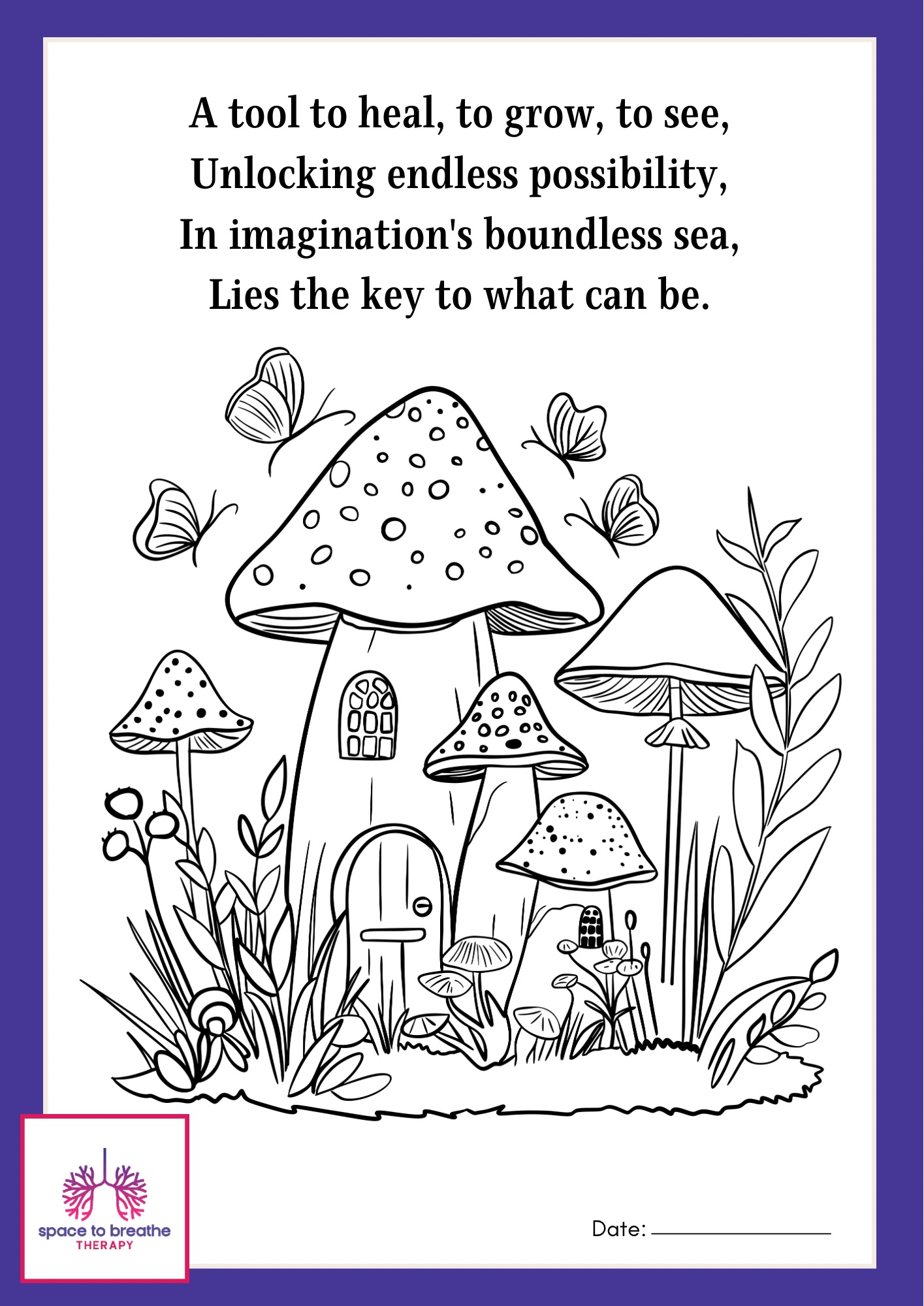
Poem colouring sheet 1
Practical Sheets & Downloads
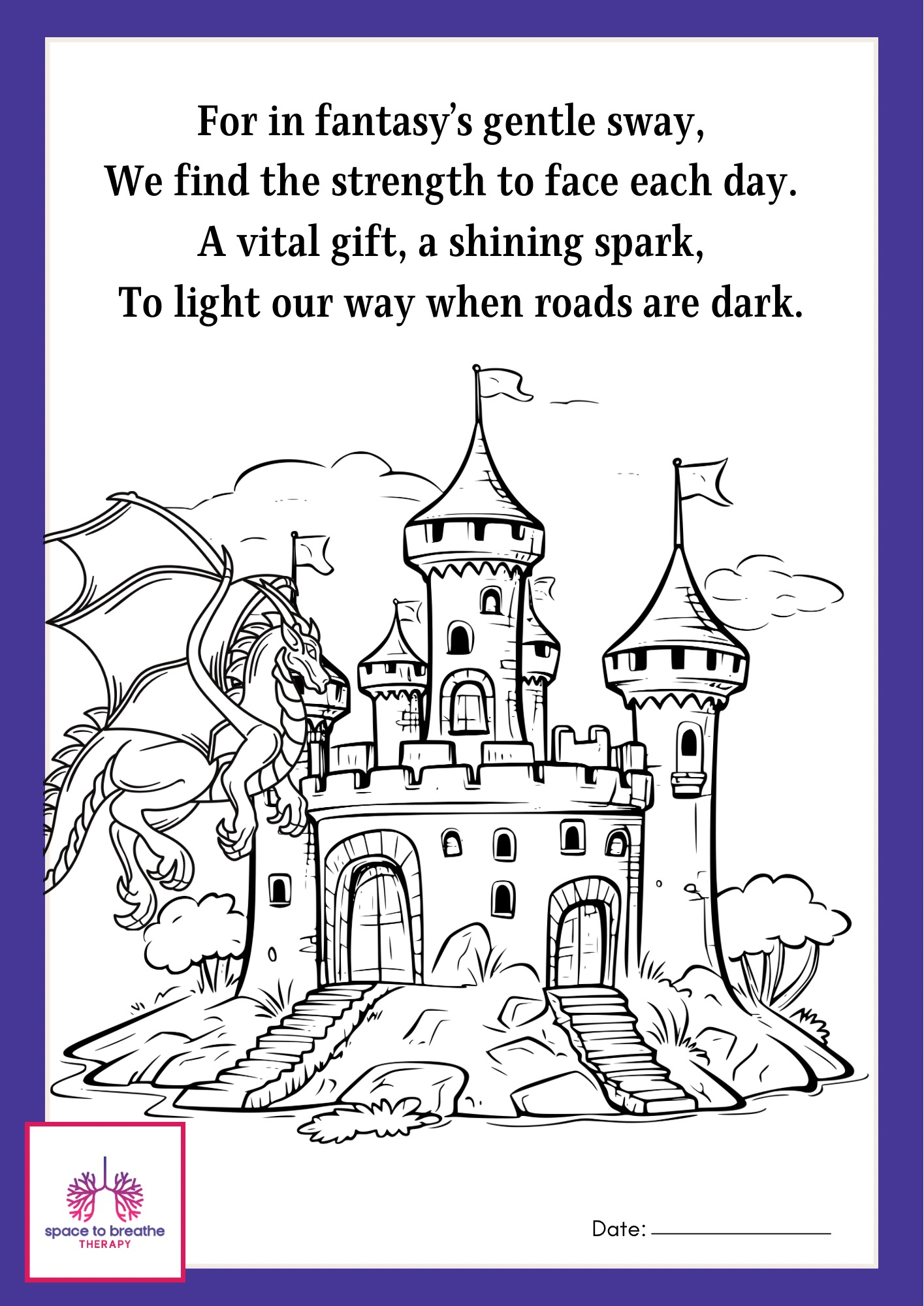
Poem colouring sheet 2
Practical Sheets & Downloads
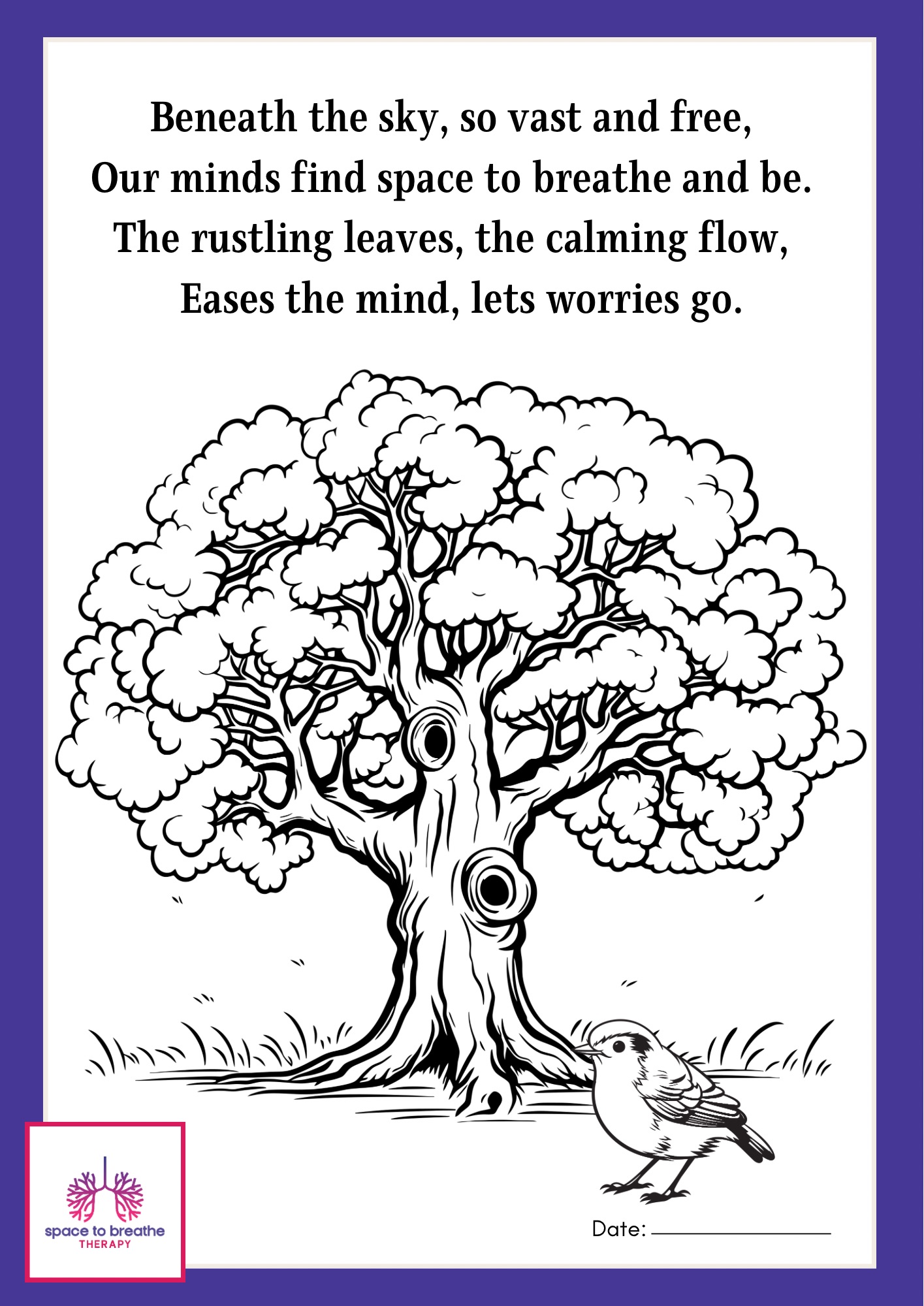
Poem colouring sheet 3
Practical Sheets & Downloads
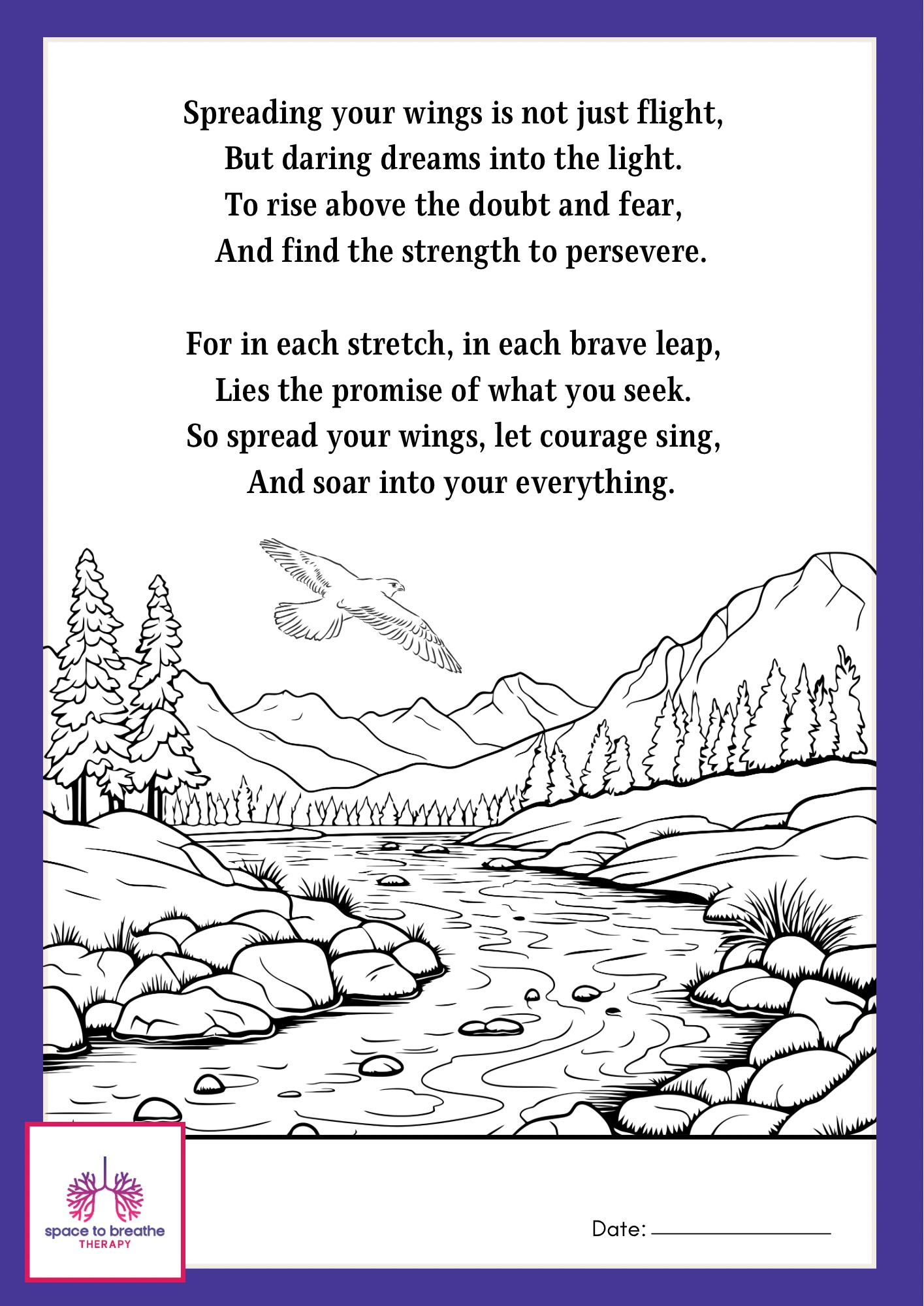
Poem colouring sheet 4
Practical Sheets & Downloads

Poem colouring sheet 5
Practical Sheets & Downloads
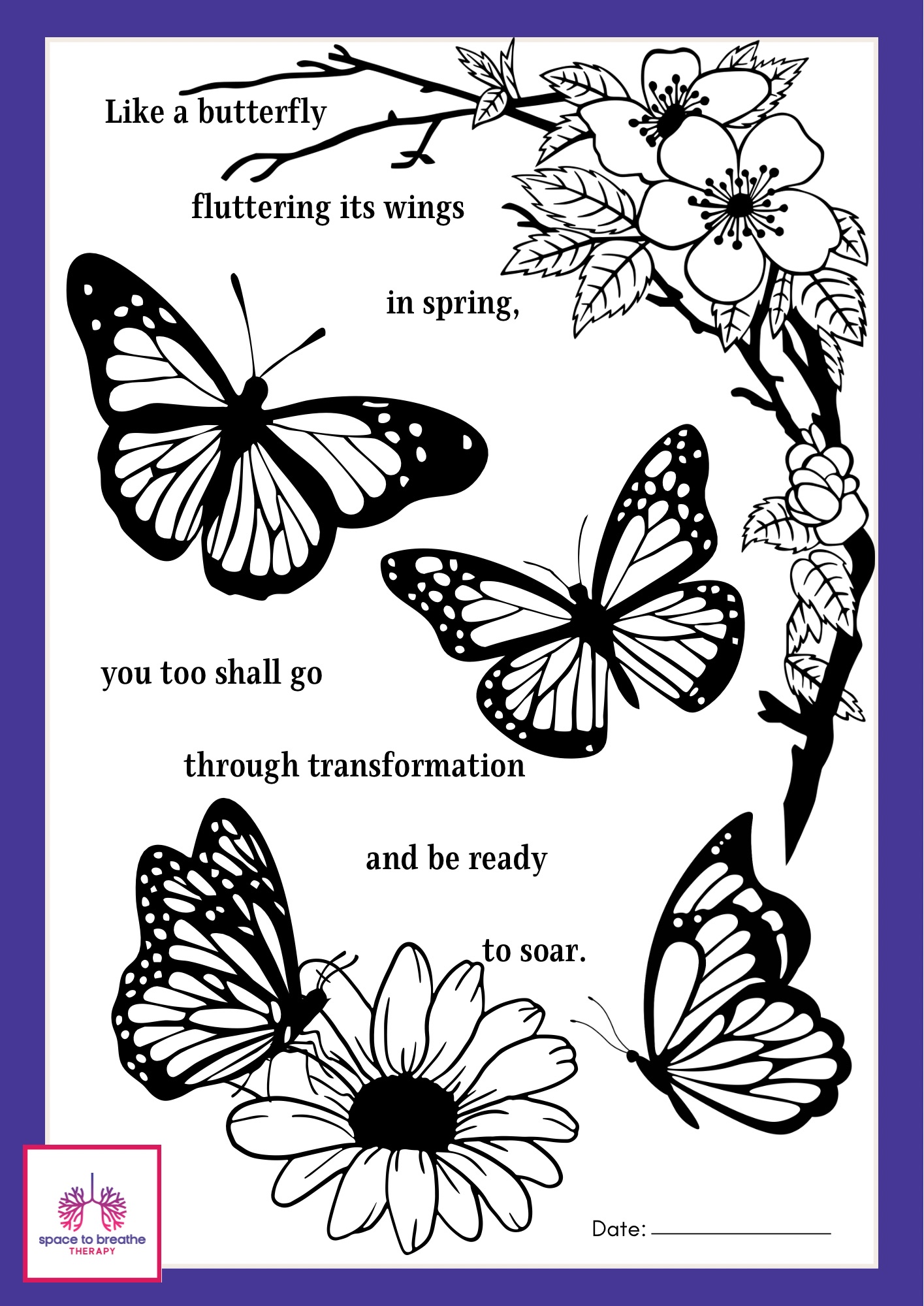
Poem colouring sheet 6
Practical Sheets & Downloads

Sunday Reflective Art Therapy Chart
Practical Sheets & Downloads

STBT mental health word search
Early Warning Signs - There are often early signs that substance use may be becoming problematic. These may include increased reliance on substances to cope with stress, changes in behaviour or mood, difficulty reducing use, or substances beginning to interfere with relationships, work, or daily life. Recognising these signs early can help people seek support sooner.
When Rest Isn’t Enough: Emotional Burnout vs Physical Tiredness
Emotional burnout drains motivation, meaning, and connection, unlike physical tiredness restored by rest.
When Motivation Disappears: Why Lack Of Motivation Is Often A Sign Of Overload, Not Laziness Or Failure
Motivation can fade under stress, overload, burnout, or unmet physical and emotional needs.
When Mental Health Affects Physical Health: The mind–body connection and why symptoms are never “just in your head”
Mental and physical health are interconnected through stress, hormones, nervous system, and biology.
Trauma Isn’t Always One Big Event: Exploring Complex Trauma and The Impact of Repeated Stress Over Time
Complex trauma develops from repeated stress, shaping trust, safety, relationships, and nervous system responses.
The Quiet Trade-Offs of Neurodivergence: Energy, Motivation, and Burnout
Neurodivergent energy varies with ADHD, autism, sensory load, motivation, and burnout risk.
The Quiet Toll: Emotional Burnout in Caring Roles
Caregiving can bring emotional burnout, compassion fatigue, and exhaustion despite deep commitment.
The Power of Talking: Why Speaking About Mental Health Reduces Isolation And Shame
Talking about mental health reduces isolation, builds connection, and encourages support.
The Nervous System Explained Simply: Fight, Flight, Freeze, and Fawn and How These Show Up at Work
Fight, flight, freeze, and fawn are instinctive nervous system responses to stress.
The Mental Load We Don’t Talk About: Invisible Labour, Decision Fatigue And How Chronic Overwhelm Impacts Wellbeing
Mental load is invisible planning, remembering, and decision-making that quietly drains energy.
The Gut-Brain Axis: Diet, Mood, Evidence and Myths
Gut health influences mood through microbiome, inflammation, diet diversity, and the gut-brain axis.
Rest Is Not Earned: Challenging Productivity Culture And Reframing Rest As a Human Need
Rest restores focus, creativity, resilience, and energy in a culture obsessed with productivity.
Progress Doesn’t Have to Be Visible
Progress often appears quietly through boundaries, resilience, kinder self-talk, and small internal shifts.
Mindfulness in Moments of Chaos: Small Techniques That Fit into Hectic Days
Small mindfulness practices like breathing, grounding, and pauses can steady attention during chaos.
Integrating mental health into healthcare enables early intervention, reducing stigma, illness progression, and suffering.
Integrating mental health into healthcare enables early intervention, reducing stigma, illness progression, and suffering.
Managing Digital Overwhelm: Social Media Fatigue and Healthy Boundaries Online
Digital overwhelm reflects constant online demands, requiring boundaries to protect attention, mood, and relationships.
Hormones and the Mind: A Short Guide
Hormonal shifts from PMDD, thyroid imbalance, and perimenopause can strongly influence mood and anxiety.
High-Functioning Anxiety
High-functioning anxiety hides behind achievement, perfectionism, over-preparing, restless thoughts, and constant pressure.
Eating Disorders and Mental Health: Awareness, Coping, and Compassion
Eating disorders involve control, emotional coping, food rituals, fear, isolation, and physical strain.
Depression Doesn’t Always Look Like Sadness
Depression can appear as numbness, irritability, exhaustion, fading joy, and persistent inner heaviness.
Anxiety & The Body: How Anxiety Shows Up Physically
Anxiety affects the body through chest tightness, digestive disruption, muscle tension, fatigue, and headaches.
Feeling Safe in the World: Identity, Belonging, and Psychological Security
Focus on identity stress, social safety, marginalisation stress, and psychological safety.
The Hidden Mental Load of Money Worry
Explores cost-of-living anxiety, financial trauma, shame, survival stress, and nervous system safety.
Why We’re More Tired Than Ever: Sleep, Stress, and the Modern Nervous System
Covers circadian rhythm disruption, stress hormones, screens, anxiety, and exhaustion culture.
When Your Body Affects Your Mind: Mental Health in Chronic Health Conditions
Focus on invisible illness, fatigue syndromes, autoimmune conditions, pain disorders, and emotional impact.
Always Online: How Constant Connectivity Is Reshaping Our Mental Health
Covers dopamine loops, social media burnout, attention fragmentation, comparison culture, and digital fatigue.
Trauma Isn’t Always a Memory, Sometimes It’s a Nervous System Pattern
Explores developmental trauma, chronic stress, attachment, and how trauma shows up somatically.
Beyond Labels: Supporting Neurodivergent Minds in a Neurotypical World
Focuses on ADHD, autism, sensory processing, masking, workplace pressures, and burnout.
Your Gut, Your Mind: How Digestive Health Impacts Anxiety, Mood, and Energy
Explores gut-brain axis research, inflammation, food sensitivities, IBS, and mental health links.
Regulation, Not Relaxation: Why Calming Your Nervous System Matters More Than Self-Care Trends
Focuses on nervous system regulation, polyvagal theory, sensory safety, and why “rest” doesn’t always mean recovery.
Burnout in Everyday Life: Why Modern Living Is Exhausting Our Nervous Systems
Explores chronic stress, decision fatigue, digital overload, caregiving fatigue, and why burnout now affects people outside traditional work environments.
Downloads - This section provides practical downloadable resources designed to support awareness, reflection, and healthier coping strategies. These may include self-reflection worksheets, early warning sign checklists, coping strategy guides, recovery planning tools, and supportive exercises that help individuals explore their relationship with substances.
These resources aim to support individuals in recognising patterns, understanding emotional triggers, and finding healthier ways to manage stress and difficult experiences.
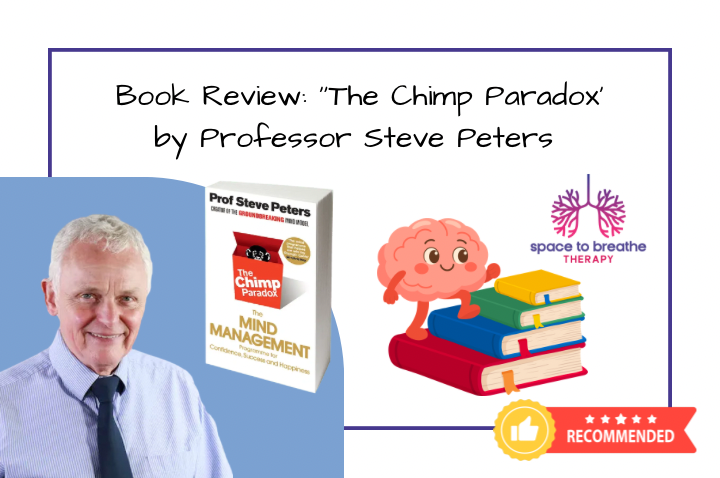
“The Chimp Paradox” by Professor Steve Peter

“Atomic Habits” by James Clear
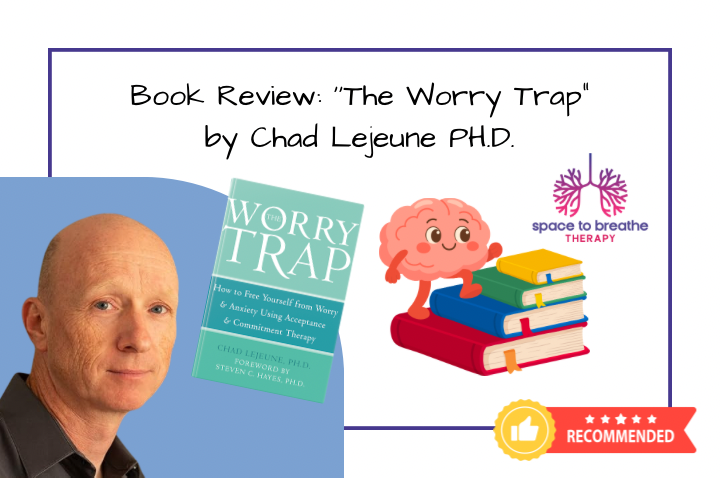
“The Worry Trap” by Chad LeJeune
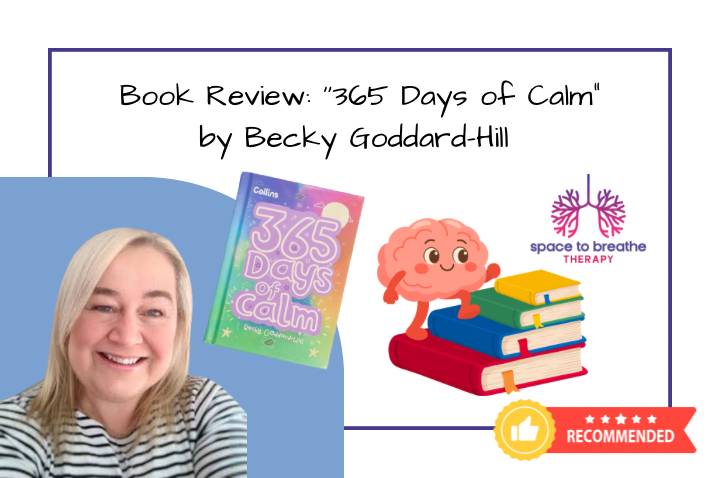
“365 Days of Calm” by Becky Goddard-Hill

“Wreck This Journal” by Keri Smith
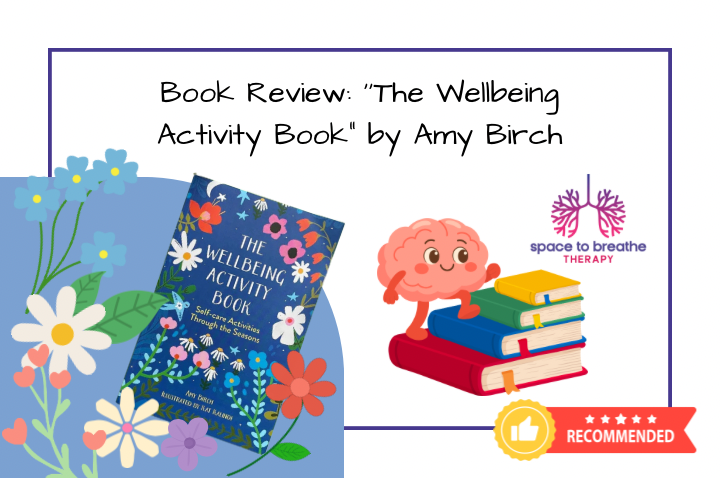
“The Wellbeing Activity Book” by Amy Birch Illustrated by Kat Kalindi
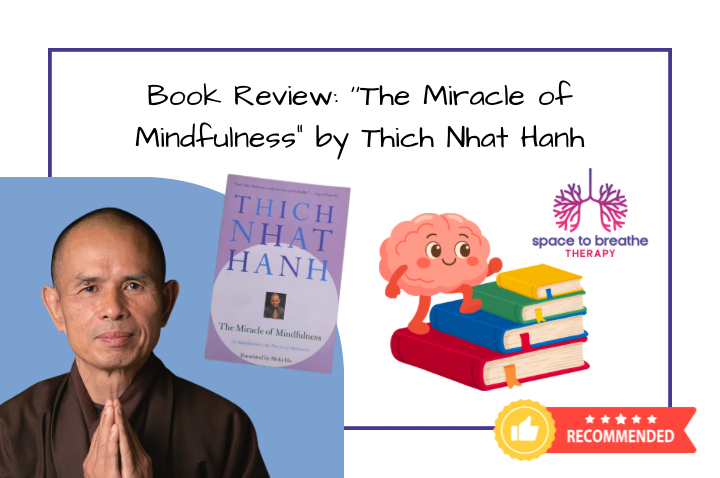
“The Miracle of Mindfulness” by Thich Nhat Hanh
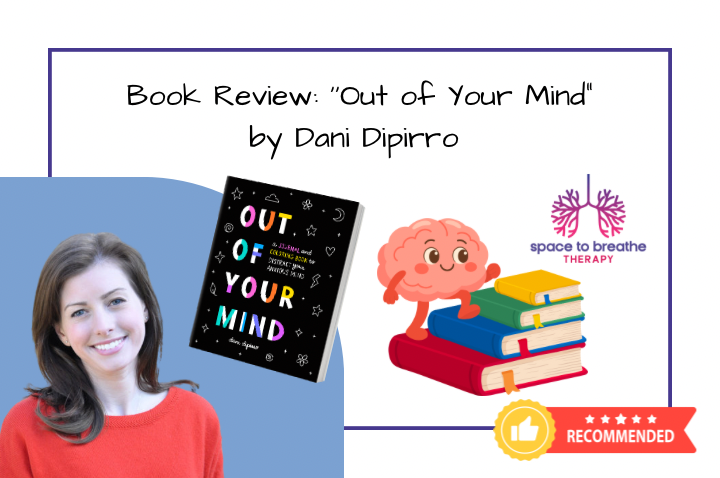
“Out of Your Mind” by Dani DiPirro

“One Line a Day” by Chronicle Books